

Summary
- A policy limit demand is a strategic legal tool used to demand the full amount of an insurance policy to settle a claim where an insured defendant likely faces exposure to liability exceeding the policy limits.
- This demand places a duty of good faith on the insurer to protect its insured (the vessel owner) from a judgment that exceeds the policy limit. An unreasonable rejection of a policy limit demand can expose the insurer to liability for the entire verdict, even including amounts over the policy limit, in addition to other damage categories, such as economic and non-economic losses of the insured.
- Maritime law presents unique challenges, most notably the Limitation of Liability Act of 1851, which provides an avenue for vessel owners to try to limit their total liability to the post-incident value of their vessel.
- Successfully challenging a limitation of liability action is often crucial. It removes this artificial cap on damages, making the full insurance policy available as a source of funds for recovery and strengthening the leverage of a policy limit demand.
- Injured maritime workers must act quickly and strategically after an accident. Consulting with an experienced maritime attorney is essential to navigate these complex legal waters and protect your right to fair compensation.
Insurance Policy Limit Demands in Maritime Law
In my years representing injured seamen, longshoremen, and other maritime workers at BoatLaw, LLP, I have seen firsthand how a serious offshore injury can turn a life upside down. The path to justice is rarely straightforward, but in maritime law, it is further complicated by a unique set of federal laws that govern incidents on navigable waters. One of the most powerful, yet nuanced, tools in our arsenal is the insurance policy limit demand. It is more than just a settlement offer; it is a calculated legal maneuver that can significantly alter the dynamics of a case, shifting risk from the injured worker to the insurance company.
This guide will demystify the policy limit demand, explaining what it is, when we consider using it, and how it interacts with the complex doctrines of maritime law.
“Knowing what the insurance limit is can give rise to a great tool called the policy limit demand….” – Nick Neidzwski
The Complex World of Maritime Insurance
Before diving into the mechanics of a policy limit demand, it’s important to understand the insurance landscape which provides the background for these demands. A vessel owner typically carries several layers of insurance. These “layers” can include both Hull & Machinery (H&M) insurance, which covers physical damage to the vessel itself, and Protection & Indemnity (P&I) insurance, which covers third-party liabilities like personal injury to crew members, passengers, and others. For an injured worker, the P&I policy is the primary source of potential recovery.
The first step in any serious injury case is to determine the available insurance coverage. Knowing the policy limit is fundamental because it defines the contractual ceiling of the insurer’s liability. However, a well-executed policy limit demand can compel an insurer to pay far beyond that ceiling.
Understanding the available insurance coverage is a foundational step in any maritime injury claim.
What is a Policy Limit Demand and When Should It Be Used?

A policy limit demand is a formal offer to settle a personal injury claim for the maximum amount available under the defendant’s insurance policy. This tool is most effective when the vessel owner likely faces exposure to liability that exceeds the policy limits.
For example, if a seaman suffers a career-ending injury due to a clear violation of safety protocols, and their medical bills, lost future wages, and pain and suffering are valued at $3 million, but the vessel owner only has a $1 million P&I policy, a policy limit demand may be an appropriate strategy.
The demand letter itself must be carefully crafted. It must:
- Clearly state that it is a demand for the policy limits.
- Provide a reasonable deadline for the insurer to accept.
- Detail the facts of the incident, establishing clear liability.
- Include comprehensive documentation of the damages (medical records, wage statements, expert reports) that justify a valuation exceeding the policy limit.
- Offer a full and final release of all claims against the insured (the vessel owner) upon payment.
A carefully drafted policy limit demand requires meticulous documentation and legal expertise.
The Insurer’s Dilemma: The Duty of Good Faith and Fair Dealing

When an insurer receives a reasonable policy limit demand, it faces a critical decision. Every insurance contract includes an implied covenant of good faith and fair dealing. This means the insurer has a duty to not only protect its own financial interests but also to give equal consideration to the interests of its policyholder, the vessel owner. If the insurer unreasonably rejects a demand to settle within policy limits, it exposes the vessel owner to the risk of a jury verdict that is much higher than the policy amount (an “excess judgment”).
If this happens, the insurer may be found to have acted in bad faith. The consequences for a bad faith judgment can be severe: the insurer can be held liable for the entire judgment, including any amount exceeding the policy limit (in addition to other damage categories). This legal principle is what gives the policy limit demand its power. It forces the insurer to evaluate the claim honestly and fairly, knowing that a gamble to save money could backfire and cost them much more down the road.
Unique Challenges in Maritime Law: The Limitation of Liability Act

While the principles of insurance bad faith apply in maritime cases, the landscape is complicated by a centuries-old law: the Limitation of Liability Act of 1851. This federal statute allows a vessel owner, after a maritime incident, to file a petition in federal court to limit their total liability for all claims to the value of the vessel and its pending freight after the incident.
This Act can be a formidable shield for vessel owners and their insurers. If a vessel is a total loss, its post-incident value could be zero or negligible, as was famously the case with the Titanic, where the owners limited their liability to the value of the surviving lifeboats. If a court grants limitation, it creates a “limitation fund” from which all claimants must be paid on a pro-rata basis. This can drastically reduce recovery for injured parties and render a policy limit demand less effective, as the insurer’s exposure is capped by the limitation fund, not the policy limit.
“Maritime workers have legal protections that are stronger than many realize, including the right to sue employers under federal statutes like the Jones Act.”
Therefore, a critical part of our strategy is often working to defeat the limitation action. To do this, we must prove that the negligence or unseaworthiness that caused the injury occurred with the vessel owner’s “privity or knowledge.” This means showing that the owner or their management knew, or should have known, about the dangerous condition. In today’s world of modern communication and management oversight, proving privity or knowledge is more achievable than it was in 1851. If we defeat the limitation action, the owner is exposed to the full measure of damages, and the P&I insurance policy becomes the primary target once again, restoring the full power of a policy limit demand.
Proving an owner’s knowledge of unsafe conditions is key to overcoming liability limitations.
What Injured Seamen Should Do

The moments, days, and weeks after a maritime accident are critical. The actions you take, or fail to take, can significantly impact your ability to recover fair compensation. As a firm that has recovered millions for injured workers, we have seen how crucial these first steps are.
“Maritime law applies based on the location of the incident, the status of the worker, and the nature of the vessel involved.”
If you are injured at sea, keep the following key points in mind:
- Report Your Injury Immediately: Notify your supervisor and ensure an official accident report is filed. Ask for a copy.
- Seek Medical Attention: Your health is the priority. See a doctor of your choosing as soon as possible and be sure to explain how the injury occurred. This creates a crucial medical record.
- Document Everything: If possible, take photos of the accident scene and your injuries. Get contact information from any witnesses. Preserve all paperwork.
- Do NOT Give a Recorded Statement: Do not give a statement to your employer’s insurance company without consulting an attorney. Your words can be used against you to deny or devalue your claim.
- Consult an Experienced Maritime Attorney as soon as possible: Maritime law is a highly specialized field. An attorney who understands the Jones Act, the doctrine of unseaworthiness, and complex procedures like the Limitation of Liability Act is essential. You can learn more about what to do after an offshore injury here.
Key Terms and Concepts in Maritime Insurance and Liability
Marine Hull Insurance
Insurance that covers physical loss or damage to a vessel’s hull, machinery, and equipment. It is essentially property insurance for the ship itself.
Limitation of Liability Act of 1851
The Limitation of Liability Act is a U.S. federal law (46 U.S.C. § 30501 et seq.) that allows the owner of a vessel to petition a federal court to limit their liability for most claims arising from a maritime casualty to the value of the vessel and its pending freight after the incident, provided the owner lacked “privity or knowledge” of the cause of the loss.
Carriage of Goods by Sea Act (COGSA)
A U.S. statute that governs the rights and responsibilities between shippers and ocean carriers regarding loss or damage to cargo. It famously includes a default liability limitation of $500 per package or customary freight unit, unless a higher value is declared by the shipper.
COGSA’s $500 per-package limitation is a critical and often-litigated aspect of cargo claims.
Maintenance and Cure
Maintenance and Cure enforces a seaman’s right under general maritime law to receive living expenses (maintenance) and necessary medical expenses (cure) from their employer when they fall ill or are injured in the service of the vessel. This is a no-fault obligation, meaning it is owed regardless of who caused the injury.
Jones Act
A federal law (46 U.S.C. § 30104) that grants seamen who are injured in the course of their employment the right to sue their employer for negligence. The standard of proof for causation is very low (“featherweight”), making it a powerful tool for injured workers.
Unseaworthiness
Unseaworthiness is a doctrine under general maritime law that imposes a strict, non-delegable duty on a vessel owner to provide a vessel and equipment that are reasonably fit for their intended purpose. A vessel can be deemed unseaworthy due to a defective piece of equipment, an improperly trained crew, or an unsafe work method.
Sue and Labor Clause
A provision in marine insurance policies that requires the insured (vessel owner) to take reasonable steps to avert or minimize a loss for which the insurer would be liable. The clause also obligates the insurer to reimburse the insured for the expenses incurred in these efforts.
General Average
A principle of maritime law where, if a voluntary sacrifice of part of the vessel or cargo is made to save the entire venture from a common peril (e.g. jettisoning cargo in a storm), all parties in the venture (ship, cargo, freight) contribute proportionally to compensate for the loss.
Securing Fair Compensation from Insurers After an Accident
The insurance policy limit demand is a testament to the fact that in law, leverage is everything. It is a strategic move that requires a deep understanding of both insurance law and the unique contours of admiralty law. When wielded correctly, it can level the playing field against large maritime companies and their insurers, forcing them to confront the full value of a claim and fulfill their duty to act in good faith.
Navigating these complex legal waters is not something an injured worker should do alone. The interplay between a policy limit demand and a potential Limitation of Liability action is just one example of the complexities involved. At BoatLaw, LLP, we have dedicated our careers to mastering this field and fighting for the rights of injured maritime professionals. If you have been injured at sea, securing expert legal counsel is the most important step you can take toward protecting your future.
You can see some of our firm’s results on our notable cases page.

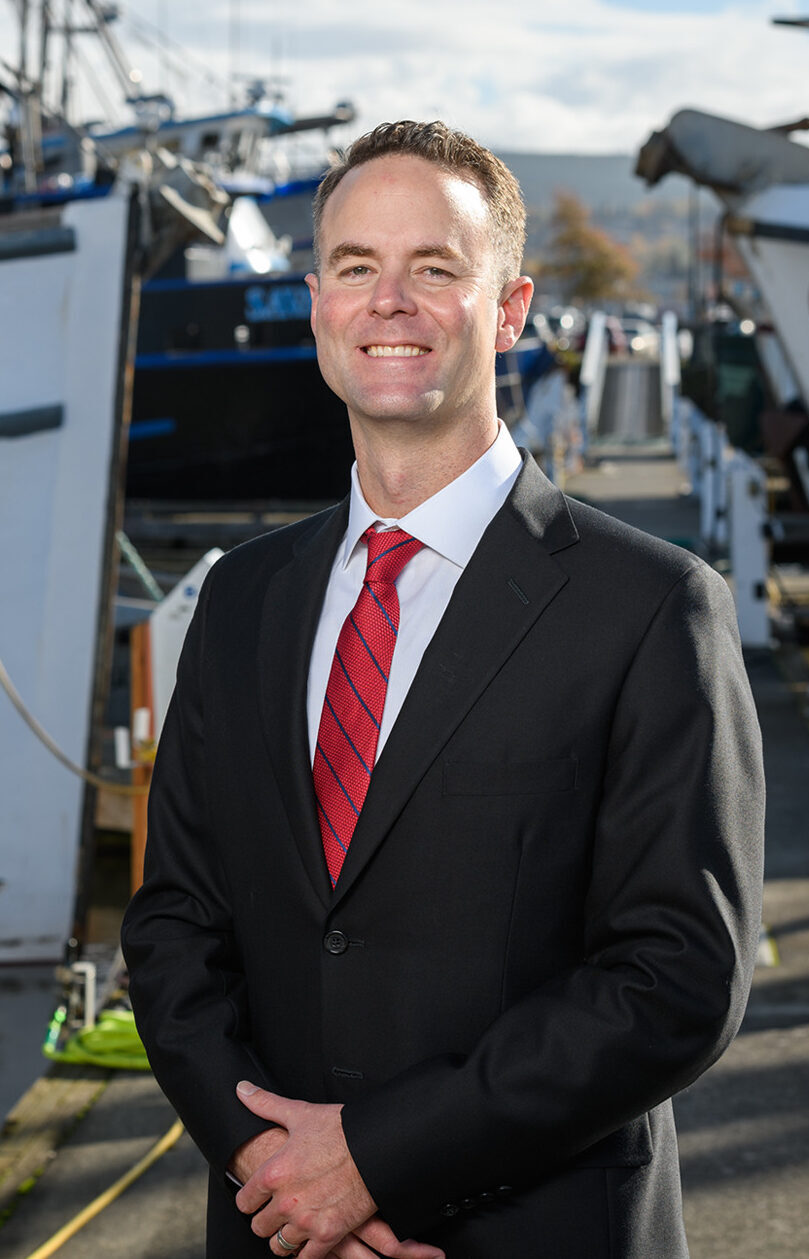
Nicholas J. Neidzwski is a trial attorney who handles maritime and personal injury litigation. Appearing for plaintiffs in state and federal courts throughout Washington, California, Oregon, Alaska, and other jurisdictions. Nick’s litigation experience includes the successful resolution of various Jones Act, general maritime, and product liability cases on behalf of many different individuals. Nick was named a Rising Star annually by Super Lawyers from 2016 through 2025, and was named a Super Lawyer in 2026. Learn more here.