

What should an injured maritime worker do after an accident? An injured mariner must immediately report the injury to their vessel supervisor, seek independent medical evaluation from a physician of their own choosing, and consult a qualified maritime lawyer before signing employer statements or accepting early settlement checks.
Understanding Your Rights Under Federal Admiralty Law
Working on the water is tough, unpredictable, and physically demanding. Whether you are hauling nets on a Bering Sea factory trawler, handling lines on a Puget Sound tugboat, or working cargo on a barge along the Columbia River, safety depends on proper equipment and crew coordination. When an onboard accident occurs, maritime law provides unique legal protections that differ significantly from state workers’ compensation systems.
For almost 50 years, the attorneys at BoatLaw, LLP have represented deckhands, engineers, fishermen, and harbor workers across Washington, Oregon, Alaska, California, and nationwide. Founded by attorneys with a lifelong love of the sea, our firm understands the realities of life offshore. Unfortunately, far too often, we have seen injured maritime workers unknowingly damage their legal claims by making preventable errors immediately following an incident at sea.
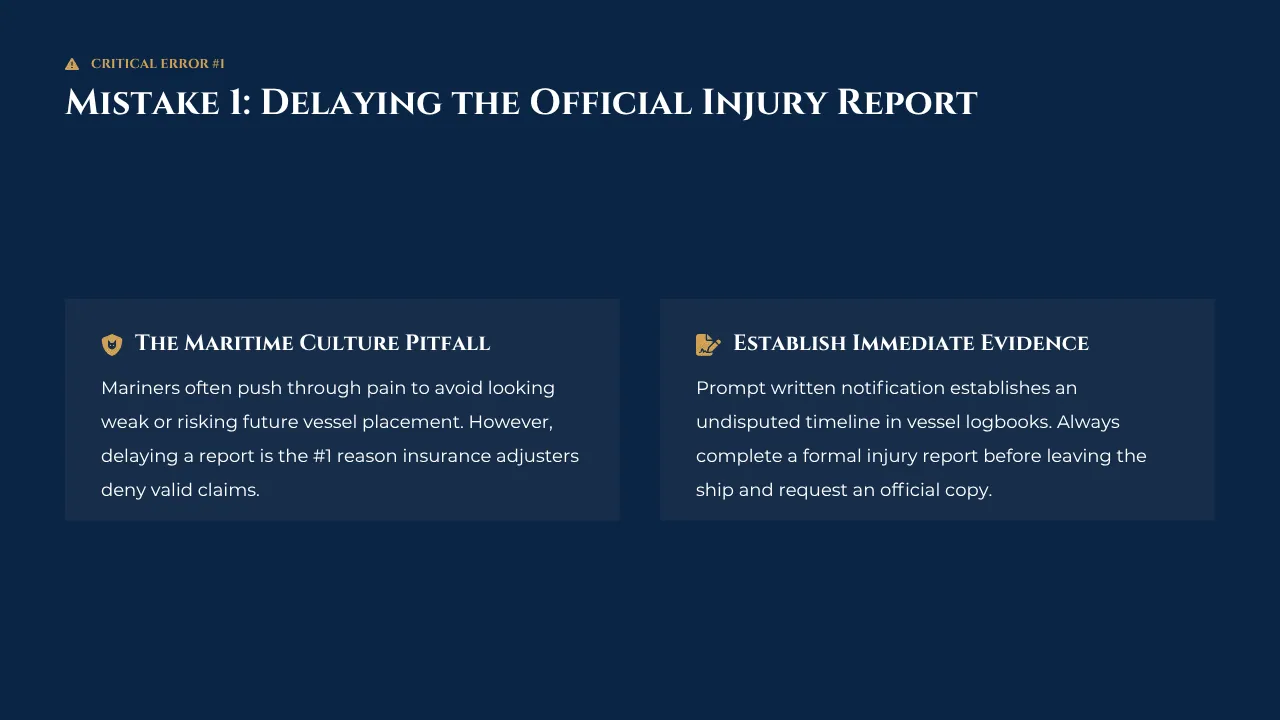
Mistake 1: Delaying the Official Injury Report
In maritime culture, workers often take pride in pushing through physical pain. Deckhands and barge workers frequently hesitate to report injuries immediately out of fear of looking weak or risking future employment on commercial vessels. However, delaying an official report is one of the most common reasons vessel owners and insurance adjusters deny legitimate claims.
Why Immediate Documentation Matters on the Water
Under maritime law, prompt notification establishes a clear timeline connecting your medical condition directly to an onboard workplace event. Vessel captains maintain official logbooks where incidents must be documented. If you wait days or weeks to report a back strain, shoulder tear, or crush injury, company insurance representatives will argue that your injury happened off the ship or was caused by a preexisting condition.
Always ensure that a formal written injury report is completed before leaving the vessel or as soon as medically feasible. Request a copy of the completed report for your personal records.
Mistake 2: Seeing the “Company Doctor” Instead of Choosing Your Own Physician
After an onboard injury, vessel managers or port captains often direct injured mariners to company-approved clinics or doctors chosen by the vessel owner. While emergency care on scene is essential, relying exclusively on company doctors for ongoing treatment can jeopardize your health and your legal rights.
Your Right to Independent Medical Treatment Under Maintenance and Cure
Under federal admiralty law, injured seamen are entitled to maintenance and cure regardless of fault. This ancient maritime doctrine requires vessel owners to cover medical care and basic living expenses until the mariner reaches maximum medical improvement.
Maritime law also grants injured mariners the legal right to select their own treating physician. This is significant because company-appointed doctors often face inherent conflicts of interest and may clear injured workers for full duty prematurely to minimize insurance liability. Seeking an independent evaluation from a trusted physician ensures your injuries are fully evaluated, properly documented, and treated without corporate interference.
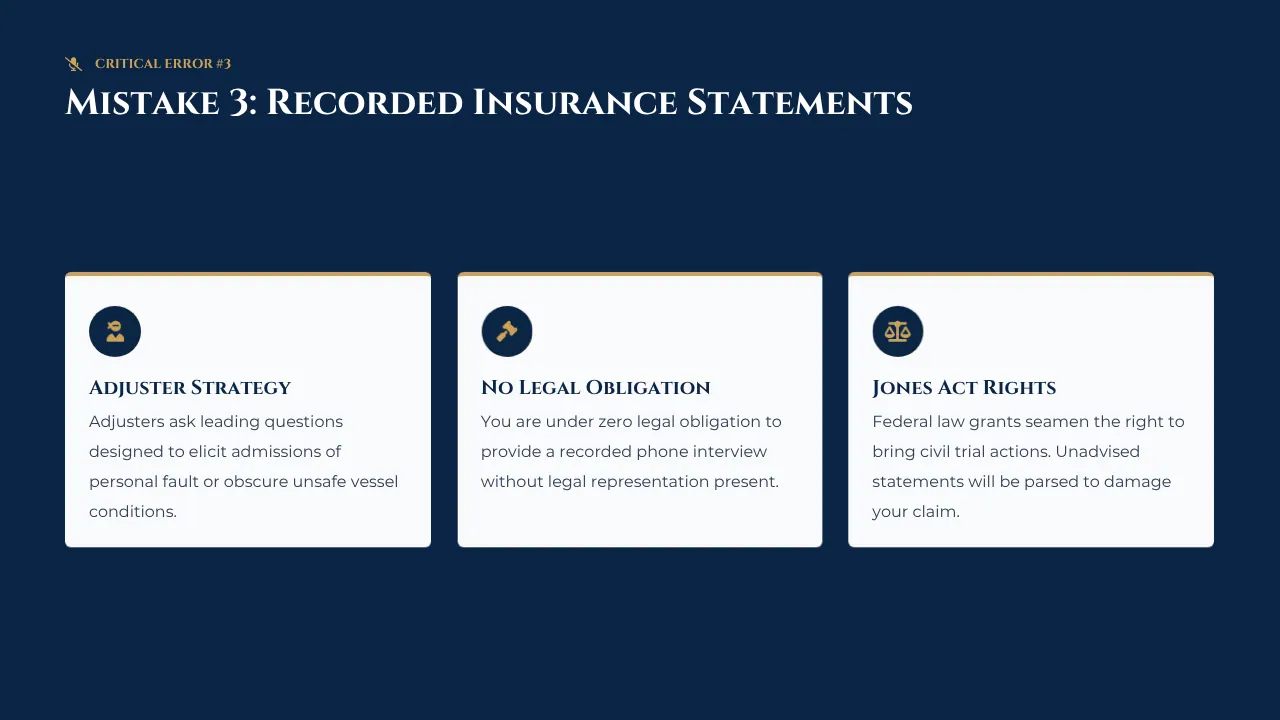
Mistake 3: Giving Recorded Statements to Insurance Adjusters
Shortly after an injury is reported, insurance claims adjusters representing the vessel owner will likely contact you. They often sound sympathetic, offering quick assistance while requesting a recorded phone interview or written statement regarding the facts of the accident.
Insurance adjusters are trained professionals whose main objective is to minimize financial payouts for the maritime employer. They frequently ask leading questions designed to extract admissions of personal fault or obscure unsafe working conditions on the vessel.
You are under no legal obligation to give a recorded statement to an insurance adjuster without legal representation present. Anything you say during these interviews can be parsed out of context and used to undermine your statutory rights under Jones Act claims.
Mistake 4: Accepting Early Settlement Offers or Signing General Release Forms
When an injury leaves a commercial fisherman or merchant mariner unable to work, financial stress accumulates rapidly. Recognizing this vulnerability, vessel owners and insurance carriers may offer quick cash payments or advance maintenance checks accompanied by paperwork for you to sign.
The Danger of Waiving Your Legal Options
In many instances, these documents contain blanket release clauses hidden in fine print. By signing a general release form, you may permanently forfeit your right to seek full compensation for lost future earnings, vocational rehabilitation, pain, suffering, and long-term medical care. Once a release is executed, reopening your case is exceptionally difficult.
Before signing any document, contract, or waiver presented by a vessel owner or insurance agent, have the paperwork evaluated by an established maritime injury law firm. Our experienced maritime attorneys review settlement documents to ensure injured workers receive complete financial protection.
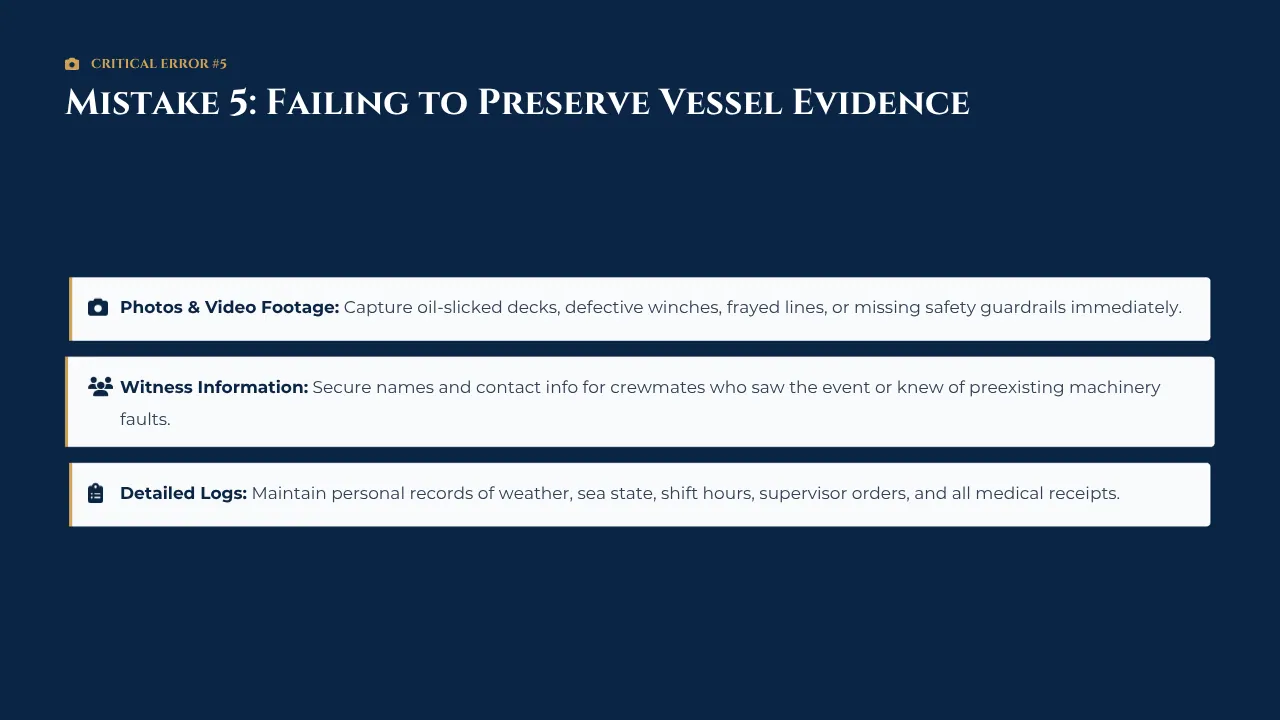
Mistake 5: Failing to Document Hazardous Vessel Conditions
Maritime claims often pivot on whether a vessel was unseaworthy or whether shipowners failed to provide a reasonably safe work environment. Equipment failures, missing guardrails, oil-slicked decks, insufficient crew staffing, and defective winch systems are major contributors to maritime casualties.
Gathering Evidence After an Onboard Accident
Occupational safety standards established by agencies such as the National Institute for Occupational Safety and Health highlight the hazards faced by maritime workers daily. When an accident occurs, evidence on a ship can disappear quickly once the vessel returns to port or undergoes maintenance.
To protect your claim, preserve key details whenever possible:
- Take photos or video footage of the unsafe equipment, deck conditions, or gear involved.
- Obtain contact information for crewmates who witnessed the incident or knew about preexisting equipment defects.
- Keep personal notes detailing weather conditions, sea state, work shift duration, and orders given by supervisors.
- Maintain copies of all medical records, travel receipts, and written communications with the employer.
Mistake 6: Hiring a General Personal Injury Attorney
Many injured maritime workers turn to local land-based personal injury lawyers or general practice attorneys. However, maritime law is a legal realm governed by highly technical federal statutes and jurisdictional rules that do not apply to automobile crashes or standard workers’ compensation claims.
Why You Need An Experienced Maritime Lawyer
A general personal injury attorney may be unfamiliar with key admiralty concepts such as vessel unseaworthiness, maintenance and cure remedies, or the Death on the High Seas Act (DOHSA). Navigating complex jurisdictional issues across state and federal courts in Washington, California, Oregon, Alaska, and Florida demands targeted legal knowledge built over decades of courtroom experience.
Partnering with dedicated maritime attorneys ensures your case is handled with an understanding of both shipboard operations and admiralty jurisprudence. Operating on a contingency-fee basis, our attorneys handle all upfront legal costs, meaning injured mariners pay no legal fees unless financial recovery is secured.
Protect Your Career and Recovery with Proven Maritime Advocates
Sustaining a serious injury at sea can threaten your livelihood, health, and family financial security. Avoiding these common mistakes puts you in the best position to secure full and fair compensation under federal law. If you or a family member suffered an injury on a commercial vessel, tugboat, barge, or processing ship, contact BoatLaw, LLP today for a free and confidential consultation. If our attorneys determine that BoatLaw may be able to assist you, a member of our legal team will reach out shortly to schedule a free, no-obligation consultation with an experienced maritime attorney.

Douglas R. Williams was raised in a military family. After retiring from the armed forces, his father sailed as the chief medical officer with many of the most popular cruise lines, including Holland America Line, Carnival Cruise Line, Disney Cruise Line, and Norwegian Cruise Line. When not in school, Doug spent a good part of his youth in the crew quarters sailing with his father on cruise ships. He developed a practical knowledge of the maritime industry from a young age. Learn More here.