

A cruise departure from the Port of Los Angeles (San Pedro) or the Port of Long Beach promises an escape down the Pacific Coast or to the Mexican Riviera. However, when an unexpected incident occurs, whether a severe slip on a wet deck, an equipment breakdown, or a serious crew member injury, a vacation or work assignment can quickly turn into a financial and legal emergency. Navigating complex maritime statutes requires experienced legal counsel. If you or a loved one suffered harm on a vessel, consulting a dedicated Los Angeles cruise ship accident lawyer is critical to protecting your rights and securing the compensation you deserve.
What should you do immediately after an injury on a cruise ship departing from Los Angeles or Long Beach?
If you are injured aboard a cruise ship departing from Los Angeles or Long Beach, immediately seek medical attention from the ship’s medical center and request written records of your treatment. Report the incident directly to vessel management, take detailed photographs of the hazard that caused your injury, and collect contact details from eyewitnesses. Most importantly, consult an experienced maritime attorney before signing any documentation or statements for the cruise line, as strict contractual deadlines and maritime statutes dramatically limit your time to file a legal claim.
Understanding Maritime Jurisdiction and Cruise Injury Claims in Southern California
Maritime personal injury claims differ significantly from standard onshore personal injury lawsuits. When a cruise ship leaves the docks of San Pedro or Long Beach and enters navigable waters, federal admiralty law generally governs the rights and remedies of both passengers and crew members.
For injured crew members including deckhands, galley staff, and entertainment personnel, the remedies available under state workers’ compensation do not apply. Instead, maritime workers are protected under statutory federal frameworks such as the Jones Act and general maritime law, which provide remedies for employer negligence, unseaworthiness of the vessel, and maintenance and cure.
For passengers, claims against major cruise lines operating out of Southern California are governed by maritime negligence law and restricted by fine-print conditions detailed in the cruise ticket contract. These contracts often mandate strict notice windows and specific legal venues where lawsuits must be filed.
Common Causes of Cruise Ship Injuries at Sea
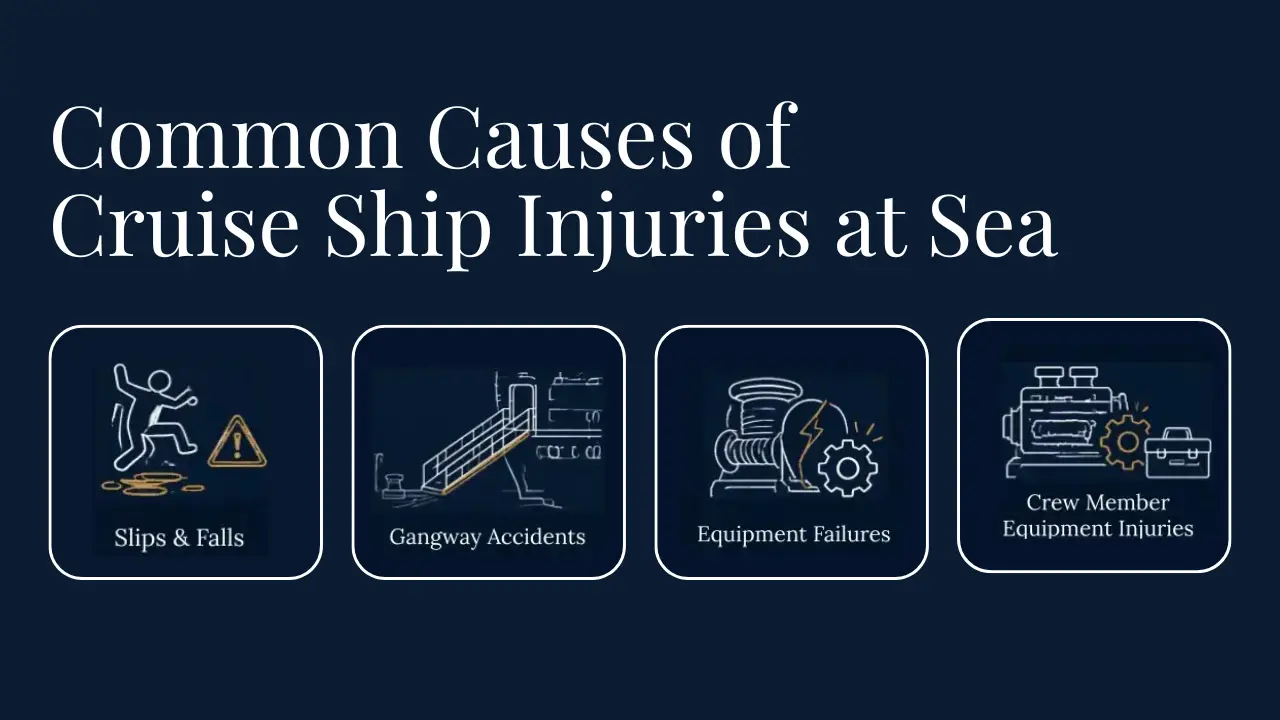
Cruise ships function as floating cities, housing thousands of passengers and workers in tight quarters while navigating unpredictable marine environments. Maritime hazards that frequently cause catastrophic injuries include:
- Slips, Trips, and Falls: Unmaintained wet decks, poorly lit stairwells, unanchored carpeting, and lack of adequate handrails.
- Gangway and Tender Accidents: Improperly secured boarding ramps or vessel-to-vessel transfer ramps during port calls.
- Excursion and Recreational Equipment Failures: Onboard activity hazards (water slides, flowriders, zip lines) or unsafe shore excursions.
- Crew Member Equipment Injuries: Heavy machinery failures in the galley, engine room, or baggage handling areas.
“Under general maritime law, a cruise line owes its passengers the duty of exercising reasonable care under the circumstances. This standard requires cruise operators to maintain a safe environment and warn passengers of known, non-obvious dangers.”
— Source: Cornell Law School Legal Information Institute (LII)
Key Legal Protections for Injured Maritime Crew Members
If you work aboard a cruise ship and suffer an onboard injury or illness, general state workers’ compensation policies will not cover your damages. Commercial maritime workers are protected under specialized federal statutes designed for the hazards of seagoing work.
The Jones Act (46 U.S.C. § 30104)
The Jones Act grants qualifying seafarers the right to sue their employer for negligence if an unsafe working condition, improper training, defective equipment, or crewmate error contributed to an injury. Unlike state workers’ comp, Jones Act claims allow injured mariners to recover full compensation for lost earnings, future earning capacity, pain, suffering, and mental anguish.
Unseaworthiness Claims
Under general maritime law, shipowners owe an absolute, non-delegable duty to provide a seaworthy vessel. A vessel is deemed unseaworthy if any part of its hull, equipment, machinery, or crew complement is not reasonably fit for its intended purpose. If an unseaworthy condition causes an injury, the vessel owner can be held strictly liable regardless of fault.
Maintenance and Cure
Regardless of who was at fault for an injury or illness occurring in the service of the vessel, an injured seaman is entitled to maintenance (a daily living allowance for food and lodging on shore) and cure (necessary medical expenses and rehabilitation) until reaching maximum medical improvement (MMI).
Crucial Steps to Take Following a Cruise Ship Accident
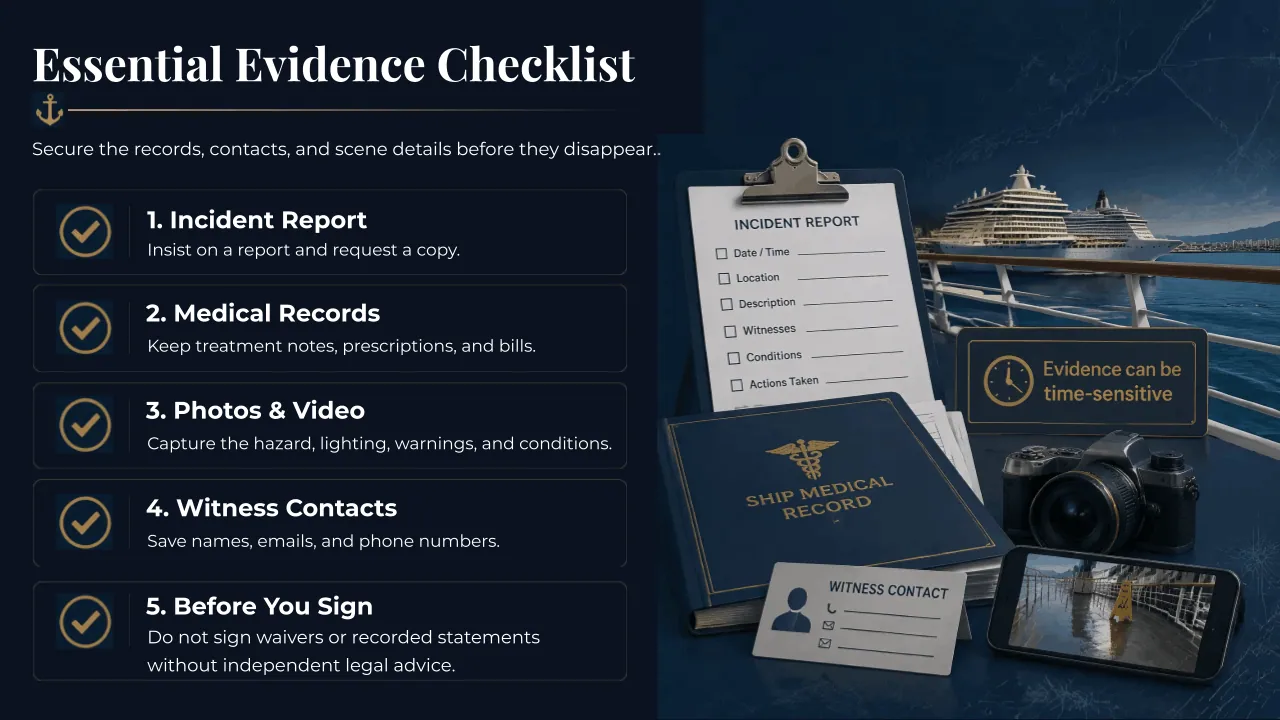
Building a successful maritime claim requires decisive action immediately following an incident. Take the following steps to protect your claim:
- Report the Incident Promptly: Notify ship security, the captain, or vessel management. Ensure an official incident report is created, and request a copy for your records.
- Obtain Immediate Medical Evaluation: Visit the ship’s medical bay right away. Request comprehensive copies of all medical notes, treatment records, and prescribed medications.
- Document the Scene and Evidence: Take clear photos and videos of the hazard that caused the incident, surrounding conditions, lighting, and any lack of warning signs.
- Gather Witness Contact Information: Collect names, email addresses, and phone numbers of fellow passengers or crew members who witnessed the event.
- Avoid Signing Unknown Waivers: Do not sign statements, liability waivers, or settlement releases provided by cruise line claims adjusters without consulting independent legal counsel.
Frequently Asked Questions (FAQ)
How long do I have to file a cruise ship injury claim in California?
While standard personal injury claims in California often allow two years, passenger cruise ticket contracts usually contain forum selection clauses and contractual limitations that require formal written notice of a claim within 6 months and filing a lawsuit within 1 year of the injury. For mariners bringing Jones Act claims, the statutory time limit is generally three years from the date of injury, though prompt action is necessary to preserve crucial evidence.
Why is specialized maritime legal representation necessary for a cruise injury?
General personal injury firms rarely handle maritime statutes like the Jones Act, DOHSA (Death on the High Seas Act), or admiralty venue rules. Specialized firms possess the technical knowledge required to challenge corporate cruise lines and navigate federal admiralty court procedures effectively. You can learn more about how experienced attorneys advocate for maritime workers by visiting our guide on cruise ship injury legal strategies.
What if I live in another state but was injured on a cruise departing from Los Angeles?
Many passengers and mariners live inland (such as Arizona, Nevada, or Kansas) but board or work on vessels operating out of Southern California ports. Regardless of where you reside, your claim is governed by federal maritime law and the specific terms of your cruise contract or employment agreement, which often mandate resolving the claim in federal court. Our team routinely represents injured clients nationwide who suffer injuries on the West Coast or on foreign-flagged cruise ships operating out of U.S. ports. For broader insights on maritime worker rights, review our overview of Jones Act rights and protections.
Why Choose BoatLaw, LLP to Stand Up for Your Rights?
With almost 50 years of dedicated legal practice since our founding in 1977, BoatLaw, LLP provides authoritative advocacy for maritime workers and injured individuals across Washington, Oregon, Alaska, California, and Florida. Led by attorneys Douglas Williams and Nicholas Neidzwski, our legal team combines decades of proven court success with a deep personal respect for the maritime way of life.
We operate strictly on a contingency-fee basis, meaning you pay zero upfront costs or legal fees unless we successfully win your case. Whether fighting powerful corporate shipping lines or securing full compensation for injured crew members, we stand as your unwavering advocate every step of the way.
Contact a Maritime Attorney Today
If you or a family member suffered an injury aboard a cruise vessel out of Los Angeles or Long Beach, time is of the essence. Strict contractual notice deadlines can extinguish your right to compensation if you wait too long.
Maritime Safety Insight
According to global cruise safety research compiled by Worldmetrics, non-collision events such as slips, trips, falls, groundings, and equipment failures, account for 90% of all cruise ship safety incidents.
Call 1-800-BOATLAW today for a free review of your case. If our attorneys determine that BoatLaw may be able to assist you, a member of our legal team will reach out shortly to schedule a free, no-obligation consultation with an experienced maritime attorney.
Legal Disclaimer
The information provided is for educational and informational purposes only. The information on this website is not intended as legal advice and should not be used as a substitute for consulting a licensed attorney. Legal outcomes and laws can vary by jurisdiction, and only a qualified lawyer can provide guidance tailored to your situation.

Douglas R. Williams was raised in a military family. After retiring from the armed forces, his father sailed as the chief medical officer with many of the most popular cruise lines, including Holland America Line, Carnival Cruise Line, Disney Cruise Line, and Norwegian Cruise Line. When not in school, Doug spent a good part of his youth in the crew quarters sailing with his father on cruise ships. He developed a practical knowledge of the maritime industry from a young age. Learn More here.