


If you have been injured while working on the water, you are likely facing a mountain of medical bills, lost wages, and a confusing web of legal terms. You know you need legal representation, but as you search for help, you keep seeing two different titles: Jones Act attorney and maritime injury attorney.
While they sound similar, choosing the wrong type of representation can drastically impact the compensation you receive. Understanding the specific differences between these legal professionals is the first step toward protecting your rights and securing your financial future.
What is a Jones Act Attorney?
A Jones Act attorney is a specialized legal professional who focuses on representing “seamen” who are injured due to employer negligence or vessel unseaworthiness. The Jones Act (46 U.S.C. § 30104) is a federal statute enacted to protect crew members of American vessels. Unlike land-based workers covered by standard workers’ compensation, qualified seamen have the right to sue their employers for negligence and seek damages for pain, suffering, and lost future earning capacity.
The Key Differences Between Jones Act and General Maritime Legal Representation
To understand which professional you need, it helps to look at how federal maritime law divides workers based on their specific job duties and where their injuries occurred.
Who Qualifies as a Seaman Under the Jones Act?
Not everyone who works on or near the water can file a Jones Act claim. To qualify as a seaman, a worker must contribute to the function of a vessel or the accomplishment of its mission, and they must have a connection to a vessel in navigation that is substantial in both duration and nature. Courts generally use a rule of thumb that a worker must spend at least 30 percent of their time serving a vessel to meet this standard.
If you are a deckhand, engineer, captain, processor, or fisherman on a commercial trawler, cargo ship, tugboat, or barge, a dedicated Jones Act attorney is essential to your case. General personal injury lawyers who occasionally handle car accidents simply do not possess the deep federal statutory knowledge required to litigate these complex claims against massive shipping corporations.
What Does a General Maritime Injury Attorney Handle?
A general maritime injury attorney handles a broader scope of maritime law, known as admiralty law. This includes injuries to people who do not meet the legal definition of a seaman. A general maritime lawyer represents clients under various other legal frameworks, including:
- The Longshore and Harbor Workers’ Compensation Act (LHWCA): This act protects land-based maritime workers, such as dockworkers, longshoremen, shipbuilders, and harbor crane operators.
- The Death on the High Seas Act (DOHSA): This statute applies to fatal accidents occurring on the high seas, beyond three nautical miles from the shore of any state.
- General Maritime Law Claims: This covers third-party negligence claims, passenger injuries on cruise ships, and recreational boating accidents.
“Maritime law is a distinct body of law that governs maritime activities and private law disputes involving marine commerce, navigation, sailors, shipping, and passengers. It operates under unique federal jurisdiction and principles that differ significantly from state common law.”
Why a Specialized Maritime Injury Attorney is Required
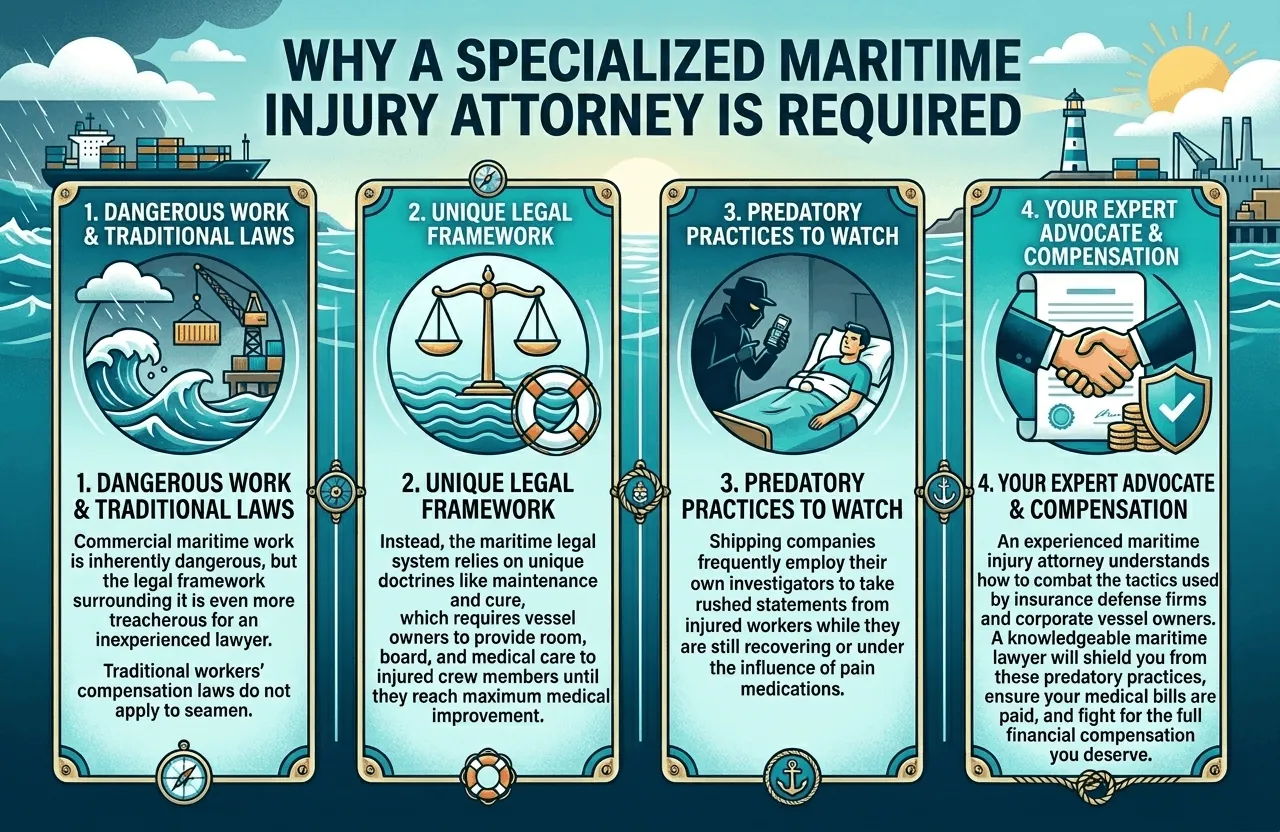
Commercial maritime work is inherently dangerous, but the legal framework surrounding it is even more treacherous for an inexperienced lawyer. Traditional workers’ compensation laws do not apply to seamen. Instead, the maritime legal system relies on unique doctrines like maintenance and cure, which requires vessel owners to provide room, board, and medical care to injured crew members until they reach maximum medical improvement.
An experienced maritime injury attorney understands how to combat the tactics used by insurance defense firms and corporate vessel owners. Shipping companies frequently employ their own investigators to take rushed statements from injured workers while they are still recovering or under the influence of pain medications. A knowledgeable maritime lawyer will shield you from these predatory practices, ensure your medical bills are paid, and fight for the full financial compensation you deserve.
How to Choose the Right Advocate for Your Maritime Claim
When selecting legal representation after an accident on the water, look for a firm with a proven track record in federal courtrooms and a deep connection to the maritime industry. If your primary goal is filing a lawsuit under federal commercial crew guidelines, working with an experienced Jones Act attorney ensures your lawyer understands the specific employer negligence frameworks that apply on navigable waters. Ask potential attorneys about their specific experience with your type of vessel, whether it is a factory trawler in Alaska, a tugboat on the Columbia River, or a container ship in the ports of Seattle, Los Angeles, or San Francisco.
By hiring a dedicated Jones Act attorney, you put a shield between yourself and corporate claims adjusters who are trained to minimize your injuries. At BoatLaw, LLP, our attorneys bring nearly 50 years of combined experience and a lifelong love of the sea to every case.
As both Jones Act and general maritime lawyers, Doug Williams and Nick Neidzwski possess the comprehensive legal expertise required to handle both specialized seaman claims and broader admiralty law matters. Founded by attorneys like experienced maritime advocates Doug and Nick, our firm understands the grueling nature of blue-collar maritime work. We serve clients across Washington, Oregon, Alaska, California, and Florida, ensuring that injured workers have a powerful ally standing up to corporate interests.
We handle all cases on a contingency-fee basis. This means there are absolutely no upfront costs or hidden legal fees for you. We only get paid if we successfully resolve your case through a settlement or a jury verdict, removing the financial barrier to high-level legal advocacy during your recovery.
Frequently Asked Questions About Maritime Injury Law
How long do I have to file a Jones Act claim?
Under federal law, the statute of limitations for a Jones Act claim is generally three years from the date of the injury. Failing to file your lawsuit within this strict three-year window will permanently bar you from seeking compensation for your injuries.
Can I file a claim if the injury was partially my fault?
Yes. Maritime law utilizes a standard known as comparative negligence. If you were partially at fault for the accident, your total compensation package will be reduced by your percentage of fault, but you are not barred from recovering damages from a negligent employer or an unseaworthy vessel.
What should I do immediately after getting injured on a vessel?
First, report the injury to your captain or supervisor immediately and ensure it is recorded in the ship’s logbook. Seek medical attention as soon as possible, take photographs of the unsafe condition that caused your injury if it is safe to do so, and contact a qualified maritime lawyer before signing any statements for company insurance adjusters.
If you or a loved one has suffered an injury while working on a commercial vessel, harbor, or dock, do not navigate the complex legal waters alone. Contact the dedicated team at Boatlaw, LLP today for a free review of your case. If our attorneys determine that BoatLaw may be able to assist you, a member of our legal team will reach out shortly to schedule a free, no-obligation consultation with an experienced maritime attorney.
Legal Disclaimer
The information provided is for educational and informational purposes only. The information on this website is not intended as legal advice and should not be used as a substitute for consulting a licensed attorney. Legal outcomes and laws can vary by jurisdiction, and only a qualified lawyer can provide guidance tailored to your situation.

Douglas R. Williams was raised in a military family. After retiring from the armed forces, his father sailed as the chief medical officer with many of the most popular cruise lines, including Holland America Line, Carnival Cruise Line, Disney Cruise Line, and Norwegian Cruise Line. When not in school, Doug spent a good part of his youth in the crew quarters sailing with his father on cruise ships. He developed a practical knowledge of the maritime industry from a young age. Learn More here.