

If you are wondering what a maritime lawyer does, the short answer is this (at least in the context of maritime personal injury cases): a maritime lawyer helps injured mariners understand and enforce their rights under maritime law when an accident happens on navigable waters or in maritime work. That can include injured seamen, deckhands, crew members, longshoremen, harbor workers, offshore oil and gas workers, commercial fishermen, and boating accident victims.
Maritime injury cases can look similar to generic personal injury cases, but the laws, deadlines, and defenses are often very different. A maritime attorney can identify which maritime law applies, preserve key evidence, guide medical documentation, and pursue compensation through a claim, settlement, or lawsuit. This information is purely educational and should not be construed as legal advice.
Types of Cases a Maritime Lawyer Handles
1. Personal Injury & Wrongful Death at Sea
In offshore injury or wrongful death cases, maritime lawyers represent injured seamen, cruise ship passengers, longshoremen, harbor workers, offshore oil/gas workers, or fishermen who have been hurt on the job.
The most common types of cases handled include:
- Jones Act (seamen injured in US waters)
- Death on the High Seas Act (DOSHA)
- Longshore and Harbor Workers’ Compensation Act (LHWCA)
- General maritime law (unseaworthiness, maintenance & cure)
2. Ship Collisions (Collisions/Allisions)
In ship collisions, a maritime lawyer helps determine fault when ships crash into each other or into docks, bridges, buoys, etc. They deal with limitation of liability actions (where shipowners try to cap their liability to the value of the vessel after the incident).
3. Cargo Claims
For cargo claims, a maritime attorney represents shippers, carriers, or insurers when cargo is lost, damaged, or delayed. They work with the Carriage of Goods by Sea Act (COGSA), Hague-Visby Rules, or Hamburg Rules, depending on the flag and ports involved.
4. Marine Insurance Disputes
For marine insurance disputes, maritime attorneys handle coverage fights over hull & machinery policies, Protection & Indemnity (P&I) club disputes, cargo insurance, and pollution liability insurance.
5. Salvage and Wreck Removal
Maritime lawyers often negotiate salvage awards for volunteers who save ships or cargo. Represents governments or owners in removing wrecked or sunken vessels.
6. Pollution and Environmental Incidents
Defends or sues after oil spills, chemical discharges, ballast water violations, etc. (Oil Pollution Act of 1990 – OPA 90, CERCLA, international MARPOL conventions).
7. Ship Arrests and Maritime Liens
In a ship arrest/lien action, a vessel may be “arrested” in port to secure claims (a unique admiralty procedure). Maritime lawyers can enforce liens for unpaid crew wages, repairs, supplies (bunkers), or necessities furnished to the ship.
8. Charter Party and Contract Disputes
Litigates or arbitrates disputes over time charters, voyage charters, bills of lading, shipbuilding contracts, or offshore drilling contracts.
9. Offshore Energy Work
In an increasingly common category, maritime lawyers assist in offshore energy claims when they handle disputes involving oil rigs, FPSOs, wind farm installation vessels, subsea cables, etc.
10. Criminal Defense (rare but high-profile)
Defends crew or companies accused of illegal dumping, smuggling, safety violations (after fatalities), or post-casualty misconduct (e.g., Magic Pipe cases, falsifying oil record books).
Examples of What a Maritime Lawyer Does for Clients

At the end of the day, the role of a maritime lawyer is to protect seamen who are injured at work. But that looks different depending on the type of accident or claim, where it took place, and who was injured or killed. Here are 8 examples of what a maritime lawyer does for different types of cases:
1. Personal Injury & Crew Claims
- Handle Jones Act personal injury and unseaworthiness claims for seamen
- Administer maintenance and cure payments for injured crew
- Represent injured longshoremen and harbor workers under the LHWCA
- Negotiate and document settlements with injured seamen or longshoremen
- Defend or prosecute cruise passenger injury claims (ticket contracts, shore excursions)
- Conduct depositions of injured crew, treating physicians, and vocational experts
- File and defend against maintenance & cure forfeiture claims
“The Jones Act is a federal statute that provides a remedy to seamen injured in the course of employment.” – Cornell Law School, Legal Information Institute
2. Death & Catastrophic Claims
- Prosecute or defend wrongful death claims under DOHSA
- Handle survivor actions under general maritime law claims after fatalities at sea or on rigs
- Represent families after crew or passenger deaths in collisions, explosions, or falls overboard
- Negotiate structured settlements involving trusts for minor children
3. Collision, Allision & Property Damage
- Investigate and defend ship-to-ship collisions and allisions with fixed objects
- File and defend limitation of liability actions (Supplemental Rule F)
- Handle salvage claims and negotiate Lloyd’s Open Form or fixed-price salvage awards
- Coordinate wreck removal operations and tenders under the Wreck Removal Convention
- File Rule 14(c) tenders and third-party complaints in multi-party casualty cases
- Attend collision trials with nautical assessors (where still used)
4. Cargo Claims
- Prosecute or defend cargo damage, shortage, or contamination claims
- Handle claims under COGSA, Hague-Visby Rules, or Hamburg Rules
- Review and interpret bills of lading and charterparty clauses
- Negotiate cargo security and attend joint surveys
- Litigate or arbitrate temperature-controlled (reefer) cargo disputes
5. Marine Insurance & P&I
- Advise P&I clubs and hull underwriters on coverage within hours of a casualty
- Handle marine insurance coverage disputes (hull, P&I, cargo, pollution)
- Draft and negotiate letters of undertaking (LOUs) to release arrested vessels
- Defend direct actions against P&I clubs under state direct-action statutes
- Represent insurers in subrogation and recovery actions
6. Vessel Arrests, Liens & Security
- File vessel arrests in U.S. federal courts under Supplemental Rules B and C
- Enforce or defend maritime liens (crew wages, necessaries, salvage, bunkers)
- Draft and file verified complaints in admiralty
- Negotiate the release of arrested or detained vessels worldwide
- Post cash bonds, club letters, or surety bonds to free vessels
7. Pollution & Regulatory
- Advice on Oil Pollution Act (OPA 90) compliance and Responsible Party designation
- Defend clients in U.S. Coast Guard, NTSB, and DOJ criminal investigations
- Respond to grand jury subpoenas (APPS, MARPOL, oil record book cases)
- File claims with the National Pollution Funds Center and the Oil Spill Liability Trust Fund
- Handle ballast water, sulfur cap, and air emission violations
- Represent clients in port-state control detentions and appeals
8. Commercial, Charterparty & Offshore Contracts
- Draft and review time/voyage charterparties (NYPE, Gencon, Supplytime, etc.)
- Litigate or arbitrate charterparty disputes (off-hire, speed & consumption, safe port)
- Negotiate and advise on shipbuilding, repair, and towage contracts
- Handle offshore drilling contracts and Master Service Agreements (knock-for-knock)
- Advise on bunker supply contracts and related lien disputes
9. Litigation & Dispute Resolution
- Prepare and respond to written discovery, interrogatories, and document requests
- Draft motions (dismiss, summary judgment, Daubert, forum non conveniens)
- Take and defend depositions of masters, pilots, experts, and corporate reps
- Appear in federal court for hearings, trials, and mediations
- Prepare appellate briefs to U.S. Courts of Appeals (especially 5th, 11th, 2nd, 9th Circuits)
- Attend arbitrations in London (LMAA), New York (SMA), Singapore, or Houston
10. Casualty Response & Investigations
- Respond 24/7 to new marine casualties worldwide
- Retain surveyors, naval architects, and fire/forensic experts immediately after an incident
- Preserve VDR data, logbooks, and electronic evidence before spoliation
- Conduct internal investigations after serious incidents
- Prepare company officers and crew for Coast Guard or flag-state interviews
- Coordinate with foreign counsel when vessels are seized or crew detained overseas
Consult with Top-Rated Maritime Attorneys

Interested in consulting with a maritime lawyer about your claim? BoatLaw’s top-rated maritime lawyers serve injury and wrongful death claims for workers in Washington, California, Alaska, Oregon, Arizona, and Florida.
Contact us online or call us at (800) BOATLAW to schedule.
The U.S. Coast Guard reported 564 recreational boating fatalities and 2,126 injuries in 2023.
Source: U.S. Coast Guard 2023 Recreational Boating Statistics
Legal Disclaimer
The information provided is for educational and informational purposes only. The information on this website is not intended as legal advice and should not be used as a substitute for consulting a licensed attorney. Legal outcomes and laws can vary by jurisdiction, and only a qualified lawyer can provide guidance tailored to your situation.

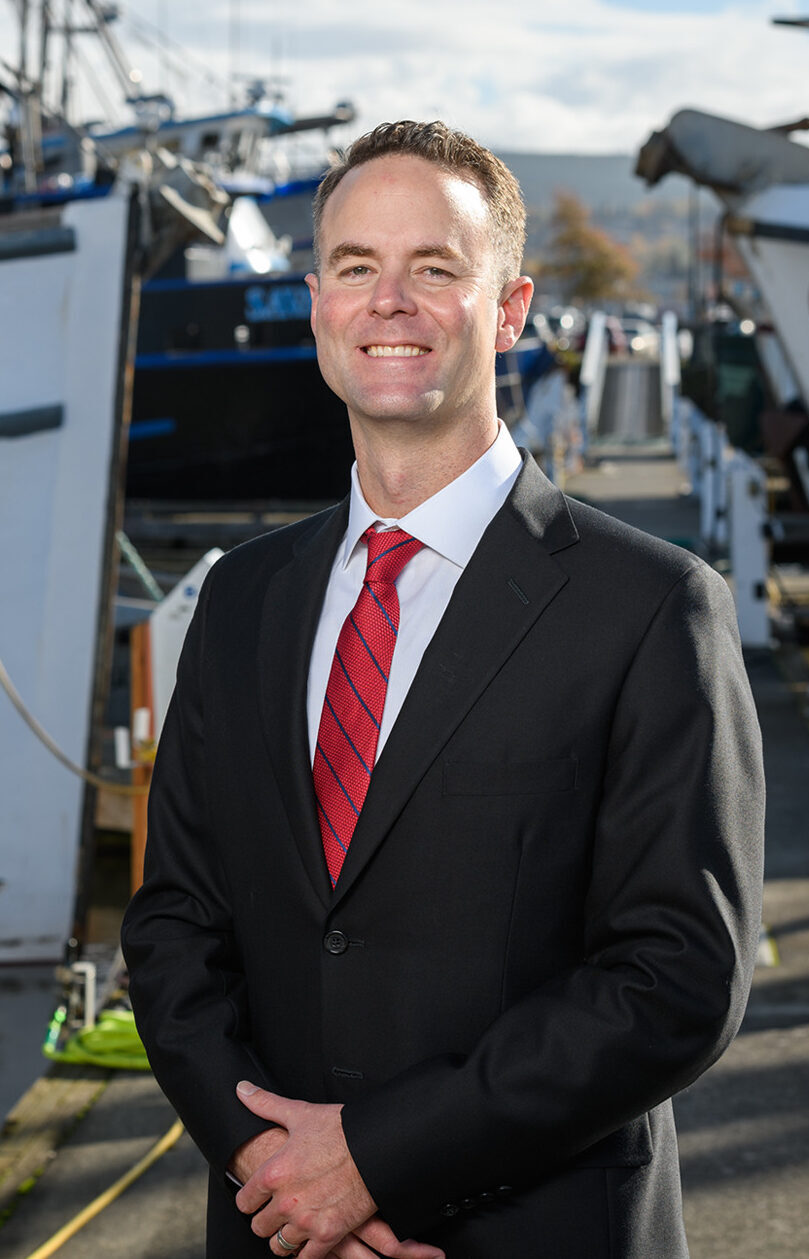
Douglas R. Williams was raised in a military family. After retiring from the armed forces, his father sailed as the chief medical officer with many of the most popular cruise lines, including Holland America Line, Carnival Cruise Line, Disney Cruise Line, and Norwegian Cruise Line. When not in school, Doug spent a good part of his youth in the crew quarters sailing with his father on cruise ships. He developed a practical knowledge of the maritime industry from a young age. Learn More here.