

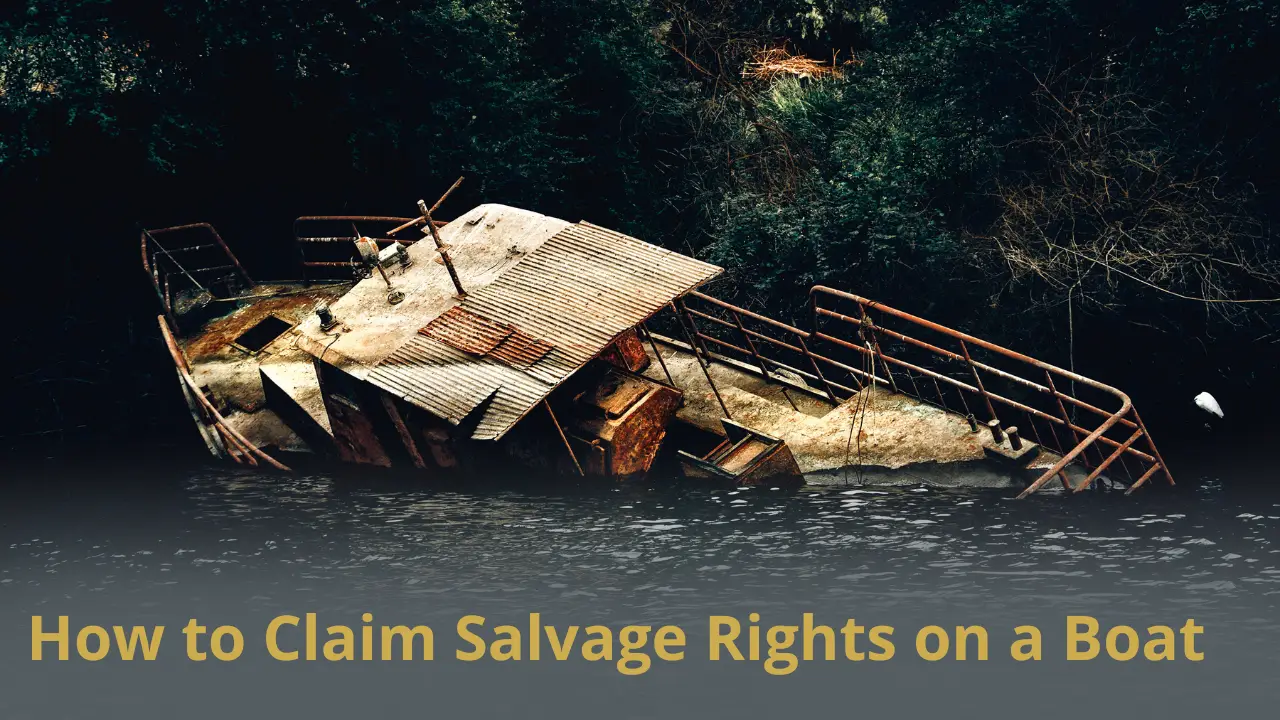
If you’ve been involved in a maritime incident, understanding your rights under maritime law is crucial. Recent sea accidents highlight the importance of knowing how to claim salvage rights and protect your interests.
What Is A Salvage Claim?
A salvage claim allows for compensation after someone or a group of people rescue another ship in need. Salvage claims revolve around three characteristics:
- There must be reasonable marine peril, the risk of the ship actually sinking.
- Rescuers cannot be under contract.
- The rescue attempt must be deemed successful by courts.
What “Salvage Rights” Mean in Maritime Law

In maritime law, salvage is the right to compensation for voluntarily saving a vessel or its cargo from peril at sea (e.g., sinking, fire, grounding, or drifting). It does not give ownership; the salvor does not automatically get to keep the boat or cargo.
- Instead, salvors earn a monetary award, often called a “salvage reward,” which considers the value of what was saved and the risk or effort involved.
- If a vessel was abandoned with no intention of recovery, it falls under “finds” law, which governs true ownership transfer. Such claims are far rarer and more difficult to prove.
Learn more about what qualifies as a salvage claim through our guide on marine salvage law.
How the Salvage Claim Process Works
1. Voluntary Act and Maritime Peril
- You must act voluntarily, without a pre-existing duty or contract.
- The vessel or cargo must face real danger, not merely drift aimlessly.
- Example: towing a vessel from imminent grounding = salvage, whereas assisting a yacht with a dead battery in calm waters = assistance, not salvage.
2. Notice and Cooperation with Authorities
- Immediately report the salvage attempt to the U.S. Coast Guard or the relevant maritime authority. Proper documentation helps prevent accusations of theft and ensures your efforts are legally recognized.
3. Secure, Protect, and Document
- Maintain detailed records, including photos, GPS coordinates, timestamps, and witness statements.
- Protect cargo from further damage. As a salvor, you have a duty of care.
4. Deliver to Safe Harbor / Owner Notification
- Bring the vessel or cargo to a safe port when feasible.
- If you can identify the owner, notify them immediately via the Coast Guard, vessel registry, insurer, or flag state.
5. File a Salvage Claim
File your claim in the U.S. Admiralty Court or the corresponding maritime tribunal abroad. Ensure your filing includes:
- Proof that the property was in peril
- Evidence of voluntary rescue
- Documentation of the property’s value and your efforts/risk
The court will determine eligibility for salvage compensation.
How the Reward Is Calculated
Courts consider the following factors when calculating salvage awards, under the Salvage Convention of 1989 or general maritime law:
- Value of property saved
- Skill and effort
- Degree of danger
- Time, expenses, and risk
- Environmental protection efforts
- Degree of success
Salvage awards typically range from 5% to 50% of the value of the saved property. Exceptional cases, such as saving lives or preventing significant environmental damage, may result in higher awards.
When It Becomes Complicated
- Multiple salvors claim credit (common in collisions or storms).
- Insurance companies get involved, and they often pay the reward directly.
- Government property/wrecks (e.g., military vessels) are protected; unauthorized salvage may violate sovereign immunity laws.
- Cultural heritage wrecks (old ships, artifacts) are subject to the UNESCO Convention on Underwater Cultural Heritage, and cannot be claimed as private salvage.
Example: U.S. Jurisdiction
If you recover a distressed vessel off the U.S. coast:
- Notify the U.S. Coast Guard Sector Command.
- Submit an Admiralty Salvage Claim in a U.S. District Court (Admiralty Division).
The court issues a “salvage award”, sometimes settled through the insurer rather than litigation.
Step-by-Step: Filing a Salvage Claim in U.S. Admiralty Law
Step 1: Verify That It Qualifies as Salvage
Confirm that your situation meets three core tests recognized by U.S. admiralty courts (from The Blackwall, 77 U.S. 1 (1869)):
- Marine peril – the vessel was in genuine danger
- Voluntary service – no prior duty to assist
- Success – you materially contributed to saving the property
Step 2: Notify Authorities
Immediately report the incident to:
- The U.S. Coast Guard (local sector command)
- Local harbor master or port authority
- If the vessel is foreign-flagged, notify the flag-state consulate or embassy
This establishes transparency and prevents the owner from alleging theft or “conversion.”
Step 3: Gather and Preserve Evidence
Collect everything that documents your efforts:
- Vessel name, registry, IMO number, and GPS location
- Photos/videos of peril and recovery
- Witness statements or AIS data logs
- Receipts for fuel, towing, diving, or equipment costs
- Damage reports from any assisting authorities
Keep a contemporaneous log; it becomes key evidence in court.
Step 4: Locate and Notify the Owner / Insurer
If the owner is known, send a written notice of your salvage claim and intent to seek compensation.
If unknown:
- File a Notice of Salvage with the U.S. Coast Guard National Vessel Documentation Center
- The Coast Guard may also issue a Notice of Vessel Recovery to locate the registered owner or insurer.
Step 5: Secure the Property
- Move the vessel or cargo to a safe berth or yard if feasible.
- Do not strip or sell anything; you hold it as bailee in possession.
- You may request a salvor’s lien, a possessory maritime lien that secures payment for your services.
Step 6: File a Salvage Action in Federal District Court
All maritime salvage cases are filed under the court’s Admiralty Jurisdiction (28 U.S.C. § 1333).
- Where to file:
- U.S. District Court for the district where the property is located or where the rescue occurred.
- How to file:
- Prepare a Verified Complaint in Admiralty for Salvage.
- Include:
- Description of property/vessel
- Facts showing peril, voluntary service, and success
- Value of property saved
- Details of your effort, risk, and costs
Attach your documentation log and request a warrant of arrest in rem (to arrest the vessel itself as the defendant).
Step 7: Arrest the Vessel (Optional)
Once the court issues the warrant, the U.S. Marshal Service will “arrest” the vessel, placing it under court custody until ownership or payment is resolved. This is typical when the owner refuses to pay or is unknown.
Step 8: Await Settlement or Adjudication
- Many cases settle through insurers once documentation is reviewed.
- If contested, the court holds a bench trial (no jury) and calculates your salvage award using the Blackwall factors:
- Labor expended
- Promptitude and skill
- Danger to salvors
- Value of property employed and risk incurred
- Value of property saved
- Degree of success achieved
Awards commonly range from 5 % to 50 % of the property’s post-salvage value.
Step 9: Receive Payment or Court-Ordered Sale
If the owner/insurer pays the award, the lien is released. If not, the court may order a judicial sale of the vessel, distributing proceeds to:
- Court costs and marshal fees
- Salvors (your award)
- Remaining balance to the owner
Step 10: File for Release / Close the Case
File a Satisfaction of Judgment and request the release of the vessel. Keep certified copies for records and potential tax reporting.
Call 1-800-BOATLAW today for a free review of your case. If our attorneys determine that BoatLaw may be able to assist you, a member of our legal team will reach out shortly to schedule a free, no-obligation consultation with an experienced maritime attorney.
Key Legal Authorities

- 46 U.S.C. § 80107–80109 – Salvage operations and awards
- 28 U.S.C. § 1333 – Admiralty and maritime jurisdiction
- Supplemental Admiralty Rules C & E – Arrest and in rem procedure
- International Convention on Salvage 1989 – Guiding treaty (U.S. follows similar principles even though not formally ratified)
- Case law: The Blackwall, 77 U.S. 1 (1869); The Sabine, 101 U.S. 384 (1879); The Tito Campanella, 250 F. Supp. 977 (S.D.N.Y. 1966)
“Maritime salvage law encourages voluntary efforts to save life and property at sea, ensuring salvors are compensated for their skill, risk, and effort.” — U.S. Coast Guard
According to NOAA, over 1,500 boating accidents were reported in U.S. waters in 2024, highlighting the importance of understanding salvage rights.
Legal Disclaimer
The information provided is for educational and informational purposes only. The information on this website is not intended as legal advice and should not be used as a substitute for consulting a licensed attorney. Legal outcomes and laws can vary by jurisdiction, and only a qualified lawyer can provide guidance tailored to your situation.

Douglas R. Williams was raised in a military family. After retiring from the armed forces, his father sailed as the chief medical officer with many of the most popular cruise lines, including Holland America Line, Carnival Cruise Line, Disney Cruise Line, and Norwegian Cruise Line. When not in school, Doug spent a good part of his youth in the crew quarters sailing with his father on cruise ships. He developed a practical knowledge of the maritime industry from a young age. Learn More here.