

What Are Waiver Agreements in Recreational Boating?
As an attorney focused on maritime and admiralty law, I often speak with individuals who have been injured on the water. A common thread in these conversations is a sense of hopelessness because they remember signing a waiver before their activity began. Whether it was for a jet ski rental, scuba diving trip, or parasailing adventure, that piece of paper often feels like the final word on your legal rights. But under the specialized rules of maritime law, this is frequently not the case.
Signed a Boating Waiver Agreement? You Might Still Have a Claim
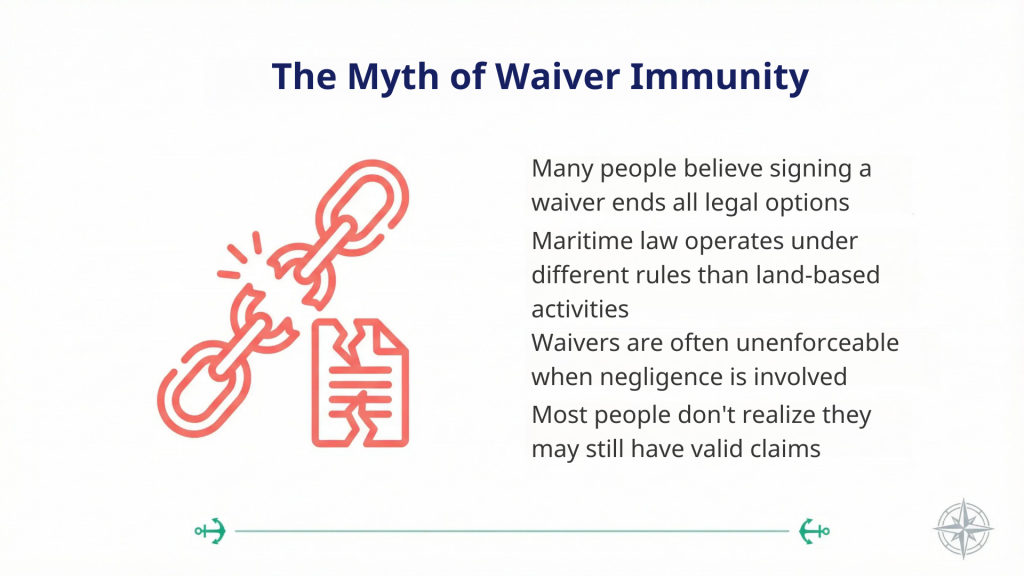
The reality is that these liability waivers are everywhere, a routine part of modern life that we often dismiss without a second thought.
…many of us unknowingly signed waiver agreements on an almost daily basis when you buy something online, when you sign up for a recreational activity, and in those contracts with the fine print is often a waiver… something to the effect of waiving a claim for any negligence on behalf of the entity that you are signing up to do an activity with.
Most people, understandably, don’t have the time or legal background to scrutinize these documents. As a result, they are often unaware of the significant rights they are supposedly giving up.
This article will explore the complex legal landscape of waiver agreements in recreational boating and explain why signing one does not automatically bar you from seeking justice if you are injured due to someone else’s negligence.
A Different Set of Rules on the Water: Waivers and Maritime Law
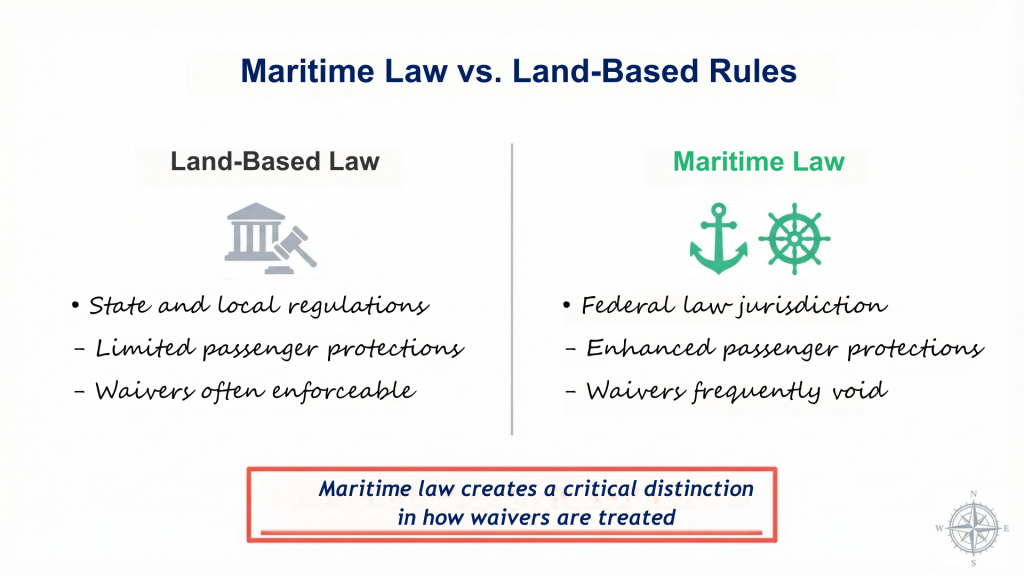
Unlike accidents that take place on land, incidents occurring on navigable waters are typically governed by maritime law—a body of federal law with unique rules and protections. One of its most important functions is to protect those who work and travel on the water. This creates a critical distinction in how waivers are treated.
Clear Protections for Seamen: The Jones Act
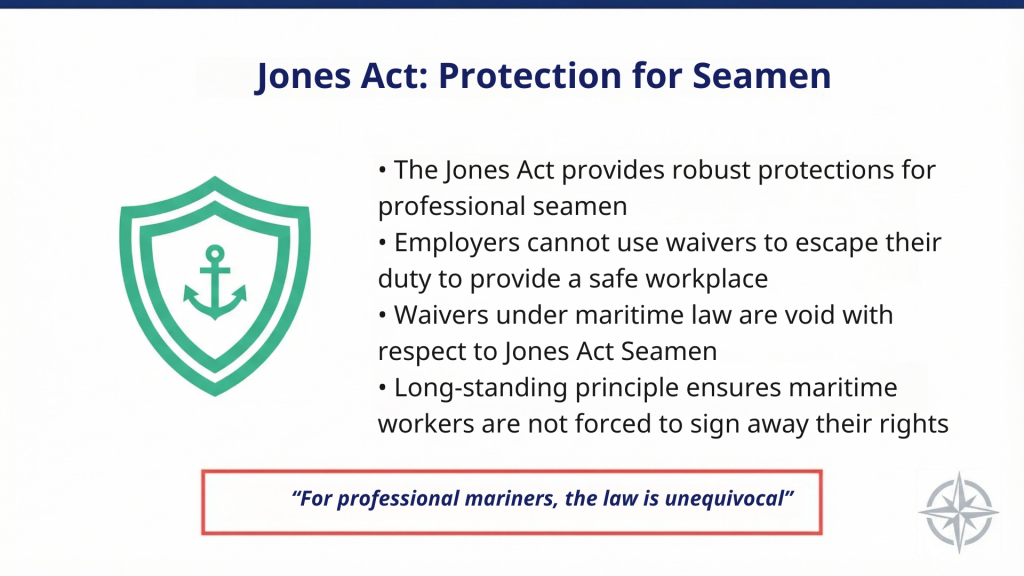
For professional mariners, the law is unequivocal. The Jones Act provides robust protections for seamen who are injured in the course of their employment. A core component of this protection is that employers cannot use waivers to escape their duty to provide a safe workplace.
Fortunately, waivers under maritime law are not effective and are void with respect to Jones Act Seaman.
This long-standing principle ensures that those who make their living on the sea are not forced to sign away their rights to be compensated for injuries caused by an employer’s or vessel owner’s negligence.
The Murky Waters of Recreational Boating
While the law is clear for professional seamen, the situation for passengers in recreational boating activities is far more complex. There is often much debate as to the enforceability of waiver agreements in recreational maritime activities (ex: recreational diving or jet boating).
Imagine a scenario: a family signs up for a guided snorkeling trip. The company, in a rush to get paying customers in the water, fails to provide proper safety instructions, uses poorly maintained equipment, or takes them to an area with dangerously strong currents. If an injury occurs, the company will almost certainly point to the waiver everyone signed. But was the waiver legally valid? This is the central question.
In recreational diving cases, a dive boat company may take passengers out for snorkel diving, scuba diving, and may not take any time to make sure the passengers are trained, may not take sufficient time to make sure the passengers are equipped with the appropriate equipment to dive in the area that they are diving in.
In these instances, the debate over the waiver’s validity hinges on a specific federal statute that has traditionally been applied to cruise ship passengers.
The Law Of Interest: 46 U.S.C. § 30509
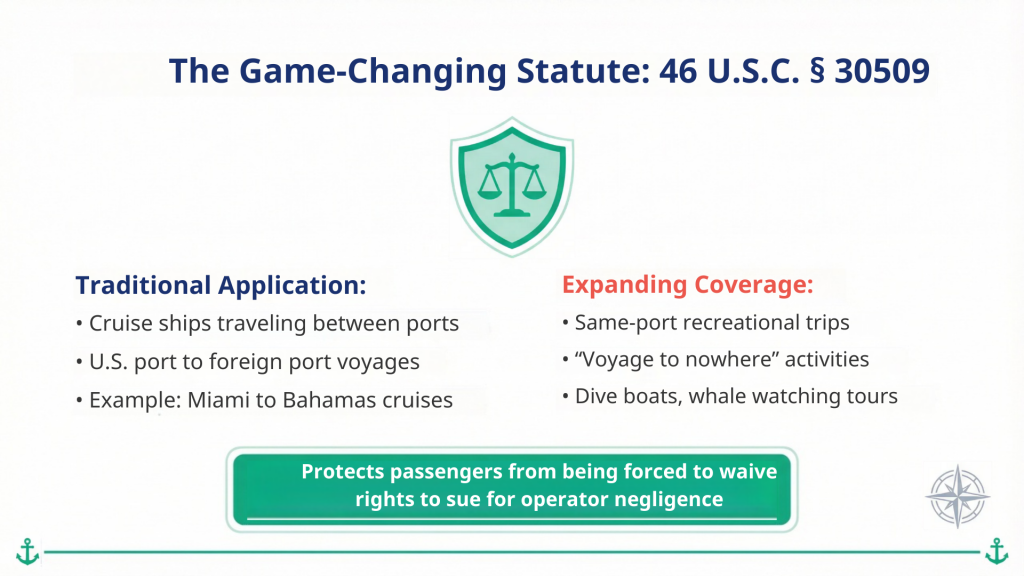
At the heart of this legal debate is a powerful federal law, 46 U.S.C. § 30509. This statute was enacted to protect passengers from being forced to waive their rights to sue for injuries caused by a vessel owner’s or operator’s negligence.
The interpretation of this law is critical, as it can render a seemingly ironclad waiver completely void.
The debate regarding the enforcement of a waiver provision centers upon the interpretation of a statute which voids waivers if the passengers were going between ports in the United States or between a port in the United States and a foreign port.
For years, this statute has been the reason why liability waivers in cruise ship ticket contracts are often unenforceable. A cruise from Miami to the Bahamas, for example, is a voyage from a U.S. port to a foreign port, placing it squarely under the protection of § 30509. But what about recreational trips that don’t go “between ports”? What about a three-hour whale-watching tour or a dive boat that leaves and returns to the same marina? For a long time, this was a legal gray area.
What This Means for You: Key Takeaways
If you or a loved one has been injured during a recreational boating or diving activity, the legal implications of this evolving area of law are incredibly important. Here are the key things to remember:
- Don’t Assume Your Claim is Barred: The most important takeaway is that signing a waiver agreement does not automatically prevent you from pursuing a claim. As cases like *Earhart* show, these waivers are often found to be void and unenforceable.
- The Nature of the Voyage is Crucial: While the law is still developing, courts are increasingly willing to apply passenger protection statutes to same-port recreational trips, not just to cruise ships traveling between different ports.
- Negligence Remains the Focus: Your claim will ultimately depend on proving that your injury was caused by the negligence of the operator or vessel owner. This could include inadequate training, faulty equipment, hiring an incompetent crew, or operating the vessel in an unsafe manner.
- Seek Experienced Legal Counsel: Maritime law is a highly specialized field. The enforceability of a waiver is a complex legal question that requires analysis of federal statutes, case law, and the specific facts of your incident. Consulting with an attorney who has deep experience in this area is essential to understanding and protecting your rights.
The law recognizes the imbalance of power between a commercial operator and a passenger. It aims to ensure that companies that profit from taking people onto the water are held accountable when their carelessness leads to harm. Do not let a piece of paper discourage you from seeking the justice you deserve.
Need Legal Help After A Boating Accident?
When facing the aftermath of injuries, partnering with BoatLaw’s experienced maritime lawyers ensures that your case is handled with the precision and dedication it demands.
Contact us today to champion your cause and navigate the complexities of maritime claims, ensuring that your rights are fiercely protected and your future is secured.
Call 1 (800) 262-8529 for a free claim review and consultation.
Do not settle for less than what your case is worth!

Nicholas J. Neidzwski is a trial attorney who handles maritime and personal injury litigation. Appearing for plaintiffs in state and federal courts throughout Washington, California, Oregon, Alaska, and other jurisdictions. Nick’s litigation experience includes the successful resolution of various Jones Act, general maritime, and product liability cases on behalf of many different individuals. Nick was named a Rising Star annually by Super Lawyers from 2016 through 2025, and was named a Super Lawyer in 2026. Learn more here.