

If you work on the water, an on-the-job injury isn’t like a slip-and-fall on land. Whether you are pulling crab pots in Alaska, throwing lines on a Columbia River tugboat, or offloading cargo at the Port of Los Angeles, a serious accident can instantly jeopardize your livelihood. In the high-stakes aftermath of a maritime accident, finding immediate legal help is critical. When searching for a “boat accident attorney near me” or “maritime lawyers near me,” you are not just looking for a general personal injury lawyer. You need a specialized advocate who understands the unique, complex framework of admiralty law.
For nearly 50 years, BoatLaw, LLP has stood side-by-side with commercial fishermen, deckhands, longshoremen, and harbor workers across the West Coast and nationwide, protecting their rights against powerful maritime employers and massive insurance corporations.
What is Maritime Law?
Maritime law (also known as admiralty law) is a distinct body of federal law governing offenses and injuries that occur on navigable waters. Unlike land-based state laws, maritime law includes specific federal statutes like the Jones Act and the Longshore and Harbor Workers’ Compensation Act (LHWCA), designed to provide compensation for injured maritime workers who are exposed to the unique perils of the sea.
Why a General Personal Injury Lawyer Isn’t Enough
When a maritime worker is injured, local television commercials often lead them to believe that any car accident attorney can handle their claim. This is a costly misconception. Standard state workers’ compensation programs do not apply to seamen, and traditional personal injury statutes fail to account for the unique doctrines of the maritime industry.
True maritime litigation requires a deep knowledge of federal jurisdictions, vessel operations, and specific legal concepts. For instance, an experienced boat accident attorney understands the crucial difference between standard negligence and the strict liability doctrine of “unseaworthiness.” Under maritime law, a shipowner has an absolute duty to provide a crew with a vessel, equipment, and team that are reasonably fit for their intended use. A missing non-skid deck coating, a faulty winch, or an undertrained crew member can render a vessel unseaworthy, opening the door for full compensatory damages that standard land-based workers would never have access to.
Furthermore, maritime jurisdiction spans across strict lines. If you reside inland in a state like Kansas or Arizona but suffer an injury while deployed on a vessel in Alaska or Washington, your case requires a firm with nationwide reach and a concrete command of federal admiralty courts. Choosing a general practitioner over a seasoned firm means leaving your financial future to chance.
What to Look For in a Maritime Accident Attorney
When you’re searching for a maritime lawyer near you, you need a vetting process that separates seasoned admiralty advocates from generic legal marketers. Keep the following criteria at the forefront of your search:
1. Verified Focus in Admiralty and Maritime Law
When vetting potential representation, an injured mariner should look directly at a firm’s active caseload and historical track record. A qualified firm should be able to demonstrate regular litigation of Jones Act claims, Maintenance and Cure disputes, and LHWCA actions. Maritime law must be the core pillar of their practice rather than a secondary footnote on a general personal injury website. For example, at BoatLaw, LLP, our attorneys share a lifelong love of the sea and have dedicated their entire careers exclusively to representing injured mariners.
2. Direct Experience with Your Vessel and Industry
A maritime attorney cannot effectively advocate for you from a desk if they do not understand the physical realities of life at sea. An educator or advocate vetting a case must look for a lawyer who understands the operational differences between a factory trawler, a push barge, a crew boat, and a container ship. They must comprehend what your specific job entails—whether you are a deckhand, engineer, or steward—so they can precisely evaluate vessel logbooks and discover employer negligence or mechanical unseaworthiness.
3. Geographic Authority and Jurisdiction
Maritime cases frequently span multiple states. Your legal team should have a strong, active presence across major maritime hubs. BoatLaw, LLP maintains physical offices and localized geographic authority across the West Coast including Bellingham, Seattle, Portland, Los Angeles, and San Francisco, while actively representing clients nationwide.
4. A Contingency-Fee Fee Structure
When you are severely injured, you cannot work, and the medical bills are stacking up. A reputable firm will always operate on a contingency-fee basis. This means you pay absolutely no upfront costs or hourly legal fees. The firm only gets paid if they successfully secure a settlement or jury verdict on your behalf, completely eliminating the financial barrier to top-tier legal representation.
“Because maritime law is distinct from the laws that apply on land, injured maritime workers require attorneys who understand the specialized statutes, treaties, and historical precedents that govern seafaring activities.”
— American Bar Association Admiralty and Maritime Law Committee
Immediate Steps to Take After an On-the-Water Injury
The actions you take immediately following an accident on a commercial craft are vital to protecting your health and your subsequent legal claim. If you are injured on a vessel, make sure to execute the following protocols:
- Seek Immediate Medical Treatment: Your health is the absolute priority. Ensure the captain logs your injury and coordinates medical evacuation if necessary. Under the maritime right to Maintenance and Cure, your employer is legally obligated to pay for your necessary medical expenses and basic living allowances until you reach Maximum Medical Improvement (MMI). Crucially, you have the right to choose your own independent doctor; do not let the company force you into using a doctor who keeps their corporate financial interests in mind.
- Report the Injury Promptly: Ensure that an official vessel injury report is filled out as soon as possible. Be factual and precise about the unsafe working conditions, broken equipment, or lack of crew assistance that led directly to the accident.
- Document the Scene and Gather Evidence: If safely possible, take photographs of the dangerous condition that caused your injury. Obtain the names and contact details of fellow deckhands or crew members who witnessed the incident.
- Avoid Signing Insurance Statements: Corporate claims adjusters will quickly arrive to offer small, immediate settlements or record interviews designed to shift the blame onto you. Do not sign anything or provide recorded statements until you have consulted a trusted legal advocate.
Frequently Asked Questions (FAQ)
How do I know if I qualify as a “seaman” under the Jones Act?
To qualify as a seaman under the Jones Act, you must be contributing to the work of a vessel that is “in navigation” on a navigable waterway. Generally, courts use a standard rule of thumb: you must spend at least 30% of your total working time on a vessel or a specific fleet of vessels. This covers most commercial fishermen, tugboat crew, deckhands, barge workers, and officers. If you do not meet this standard, you may still be fully covered under the Longshore and Harbor Workers’ Compensation Act (LHWCA) if you are a harbor worker or shipbreaker.
How long do I have to file a maritime personal injury lawsuit?
For most maritime personal injury and Jones Act claims, the federal statute of limitations is three (3) years from the date of the injury. If you are filing a claim against a government-owned vessel or under a specific cruise line’s passenger ticket contract, the deadline can be much shorter—sometimes as little as one year. Because of these varying timelines, it is critical to consult a maritime attorney immediately to avoid losing your right to compensation.
What compensation am I entitled to after a boat or vessel accident?
If your injury was caused by negligence or an unseaworthy vessel, you may recover damages far beyond standard land-based workers’ comp. This includes compensation for past and future lost wages, loss of earning capacity, past and future medical care, physical pain and suffering, emotional distress, and vocational rehabilitation. You are also immediately entitled to “Maintenance and Cure”—which covers your daily living expenses and medical bills while you are recovering.
Do I have to hire a lawyer located in the exact city where my accident happened?
No. Maritime law is governed by federal statutes, meaning a specialized firm with broad geographic reach can represent you regardless of where you live or where the vessel was operating. What matters most is that your legal team has a deep understanding of federal admiralty courts and maintains strong jurisdictional standing across major maritime hubs to effectively file suit against your employer.
Contact BoatLaw, LLP: Your Powerful Maritime Advocates
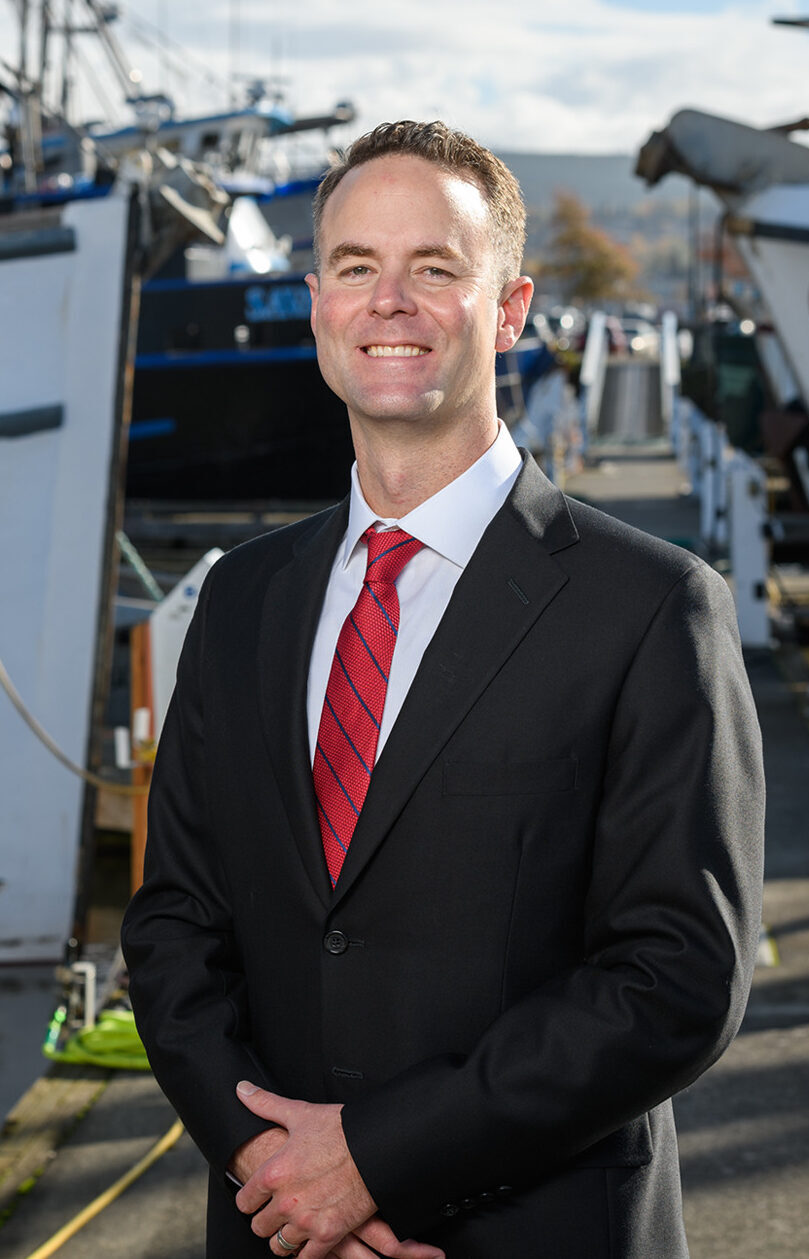
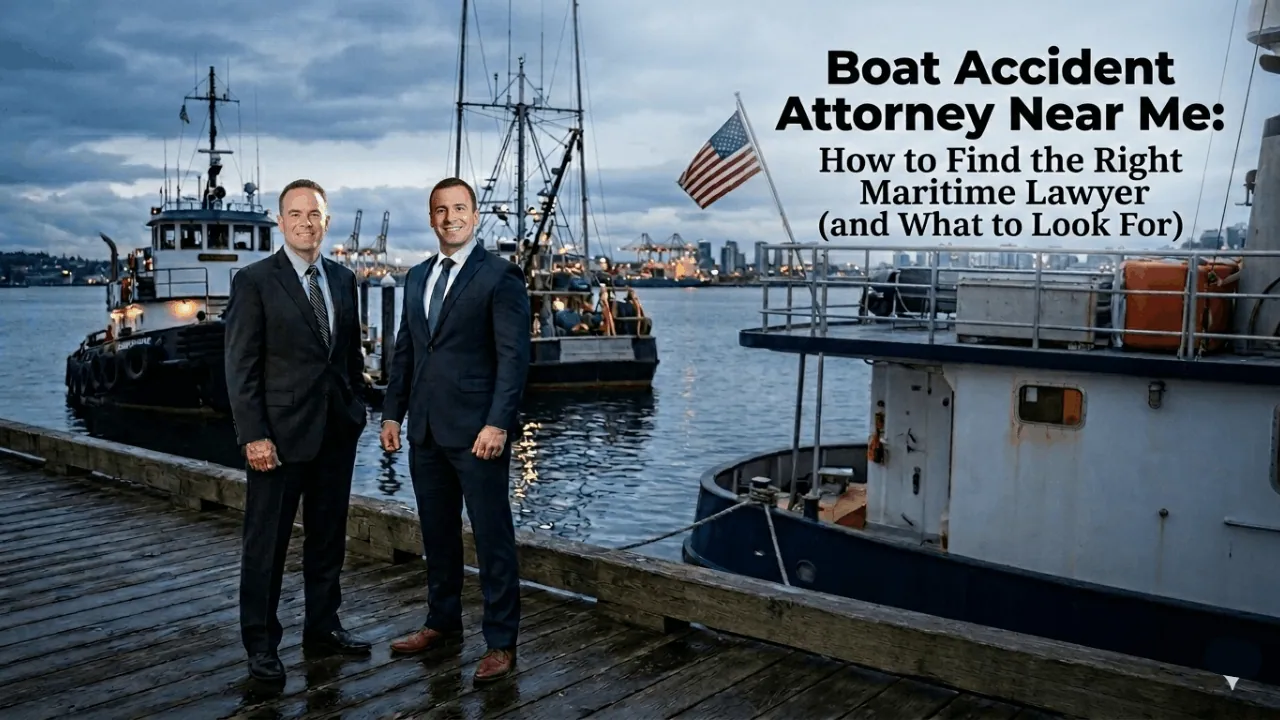
For nearly 50 years, the attorneys at BoatLaw, LLP including Doug Williams and Nick Neidzwski, have successfully stood up to massive shipping corporations, seafood processors, and insurance conglomerates. We bring elite legal knowledge mixed with a blue-collar work ethic to ensure you receive the maximum compensation you are rightfully owed for lost wages, medical treatment, pain, suffering, and vocational rehabilitation.
Maritime Safety Fact: According to data compiled by the National Institute for Occupational Safety and Health (NIOSH), commercial fishing consistently ranks as one of the most hazardous occupations in the United States, with a fatality rate many times higher than the national average for all land-based civilian workers.
If you are searching for a premier boat accident attorney to protect your future, call 1-800-BOATLAW today for a free review of your case. If our attorneys determine that BoatLaw may be able to assist you, a member of our legal team will reach out shortly to schedule a free, no-obligation consultation
Legal Disclaimer
The information provided is for educational and informational purposes only. The information on this website is not intended as legal advice and should not be used as a substitute for consulting a licensed attorney. Legal outcomes and laws can vary by jurisdiction, and only a qualified lawyer can provide guidance tailored to your situation.

Douglas R. Williams was raised in a military family. After retiring from the armed forces, his father sailed as the chief medical officer with many of the most popular cruise lines, including Holland America Line, Carnival Cruise Line, Disney Cruise Line, and Norwegian Cruise Line. When not in school, Doug spent a good part of his youth in the crew quarters sailing with his father on cruise ships. He developed a practical knowledge of the maritime industry from a young age. Learn More here.