

Alaska commercial fishing is widely recognized as one of the most hazardous lines of work in North America. Whether casting nets for wild salmon in Bristol Bay, setting pot lines for king crab in the turbulent Bering Sea, or trawling for pollock in the Gulf of Alaska, fishermen perform demanding physical labor under extreme environmental conditions. When severe injuries occur, long-standing maritime laws provide critical protections and financial avenues for recovery.
A Jones Act attorney is a specialized maritime lawyer who represents qualified seamen injured at sea due to employer negligence or unseaworthy vessel conditions. Under federal admiralty law, an injured commercial fisherman can recover compensation for lost wages, medical expenses, disability, and pain and suffering through a Jones Act negligence claim or unseaworthiness cause of action.
At BoatLaw, LLP, our legal team brings over five decades of dedicated advocacy to commercial fishermen, deckhands, processors, and captains across Alaska and West Coast waters. We provide the experience needed to take on major fleet operators and insurance carriers, ensuring injured crew members receive every dollar they are legally owed.
Alaska Commercial Fishing Dangers in the Bering Sea and Gulf Waters
Alaska’s maritime environment is notoriously unforgiving. Operating in sub-zero temperatures, navigating heavy sea swells, and working around complex heavy machinery create a high-risk environment where safety oversights can lead to life-altering consequences.
Common Causes of Fishing Vessel Injuries
- Heavy Machinery Accidents: Entanglement in hydraulic winches, line haulers, crab pot launchers, or net drums.
- Slip, Trip, and Fall Incidents: Decks coated in ice, fish slime, uncontained diesel fuel, or obstructed by loose rigging.
- Extreme Weather Exposures: Hypothermia, severe frostbite, and capsizing or sinking events triggered by heavy ice buildup on vessel superstructures.
- Crush Injuries: Unsecured cargo, shifting pot stacks, or swinging crane loads striking crew members on deck.
- Overuse and Strain: Repetitive heavy lifting without proper fatigue management, adequate relief shifts, or working gear.
Major commercial operations, including longlining fleets, factory trawlers, and crab processors, owe a strict duty of care to maintain a safe working environment. When boat owners prioritize speed and catch volumes over fundamental safety protocols, crew members bear the physical cost.
Commercial fishing continues to register among the highest occupational fatality rates in the United States, with vessel sinkings, falls overboard, and deck machinery hazards accounting for the majority of severe incidents.
Understanding Your Legal Rights Under the Jones Act and Admiralty Law
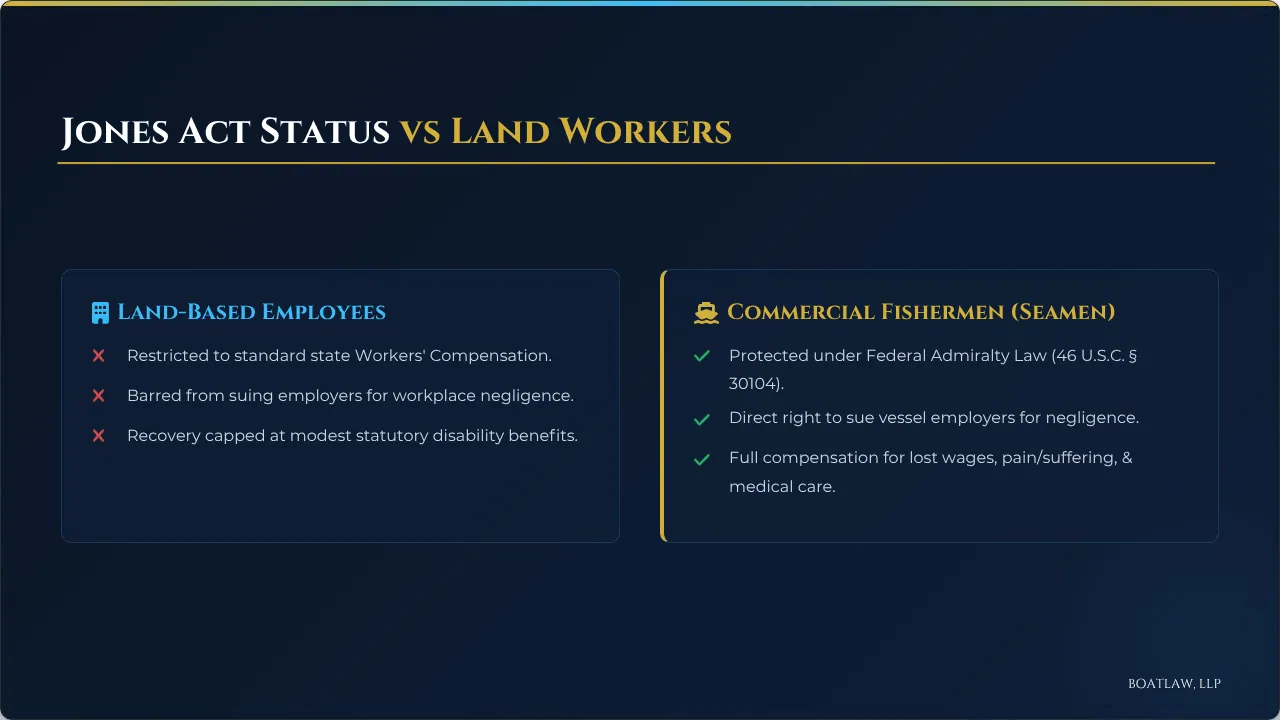
Unlike standard land-based workers who are restricted to traditional workers’ compensation programs, commercial fishermen are classified as seamen under federal law. This distinction gives injured crew members access to robust federal remedies.
1. Jones Act Negligence (46 U.S.C. § 30104)
The Jones Act permits injured seamen to sue their employer if negligence played any role—even a minor one—in causing their injury. Examples of employer negligence include providing inadequate crew training, failing to maintain deck equipment, ordering work during dangerously hazardous weather, or ignoring known mechanical defects.
2. The Doctrine of Unseaworthiness
Under general maritime law, a vessel owner guarantees that the ship, its equipment, and its crew are reasonably fit for their intended purpose. Unseaworthiness does not require proof of owner negligence; if a piece of equipment breaks, a hull fails, or an undertrained crew member causes harm, the vessel owner is strictly liable for resulting injuries.
3. Maintenance and Cure
Regardless of who was at fault for an accident, an injured commercial fisherman is entitled to Maintenance and Cure benefits from their employer until reaching Maximum Medical Improvement (MMI):
- Maintenance: A daily allowance paid to cover basic living expenses (food, rent, utilities) on shore during recovery.
- Cure: Complete coverage for all reasonable and necessary medical treatment, hospital stays, surgeries, medications, and physical rehabilitation.
If an employer unreasonably delays or refuses to pay Maintenance and Cure, they may face punitive damages and legal fees under federal admiralty practice.
Immediate Steps to Take After an Alaska Fishing Boat Injury
The actions you take in the hours and days following a maritime injury can significantly affect the outcome of your claim. Shipping companies and their insurance adjusters often move quickly to minimize liability. Protecting your health and legal rights requires immediate action.
- Report the Injury Immediately: Inform the vessel captain or engineer right away. Ensure a written report is drafted, and request a copy for your records.
- Obtain Prompt Medical Treatment: Seek immediate evaluation from a qualified physician. Do not allow company representatives to dictate your care or pressure you to skip necessary medical evaluations.
- Document the Scene and Circumstances: Take photos or videos of the hazardous condition, broken machinery, or icy deck area if safely possible. Keep detailed personal notes regarding how the incident occurred.
- Gather Witness Contact Details: Write down the full names, phone numbers, and addresses of fellow deckhands, engineers, or crew members who witnessed the incident or knew of equipment defects.
- Avoid Signing Settlement Documents: Do not sign formal recorded statements, liability releases, or early cash settlement offers without first speaking to an experienced boat accident lawyer.
Why Hiring a Dedicated Maritime Lawyer is Essential
Maritime personal injury claims are governed by federal admiralty jurisdiction, specialized legal doctrines, and strict statutory timelines. Standard personal injury law firms operating on land rarely possess the practical technical knowledge required to litigate complex vessel accident cases against maritime insurance syndicates.
BoatLaw’s maritime attorneys, Douglas R. Williams and Nicholas J. Neidzwski, have decades of focused trial experience and focus their practices exclusively on maritime matters. Our firm understands the daily realities of Bering Sea crabbers, Gulf of Alaska trawlers, and Southeast Alaska salmon fleets. We regularly investigate vessel logs, secure electronic chart data, consult naval architects, and stand up against large corporate fleet operators.
Operating entirely on a contingency fee basis, we cover all costs associated with building your case. You owe no upfront legal fees, and we only receive payment if we successfully recover for you through a negotiated settlement or court verdict.
Frequently Asked Questions for Injured Alaska Fishermen
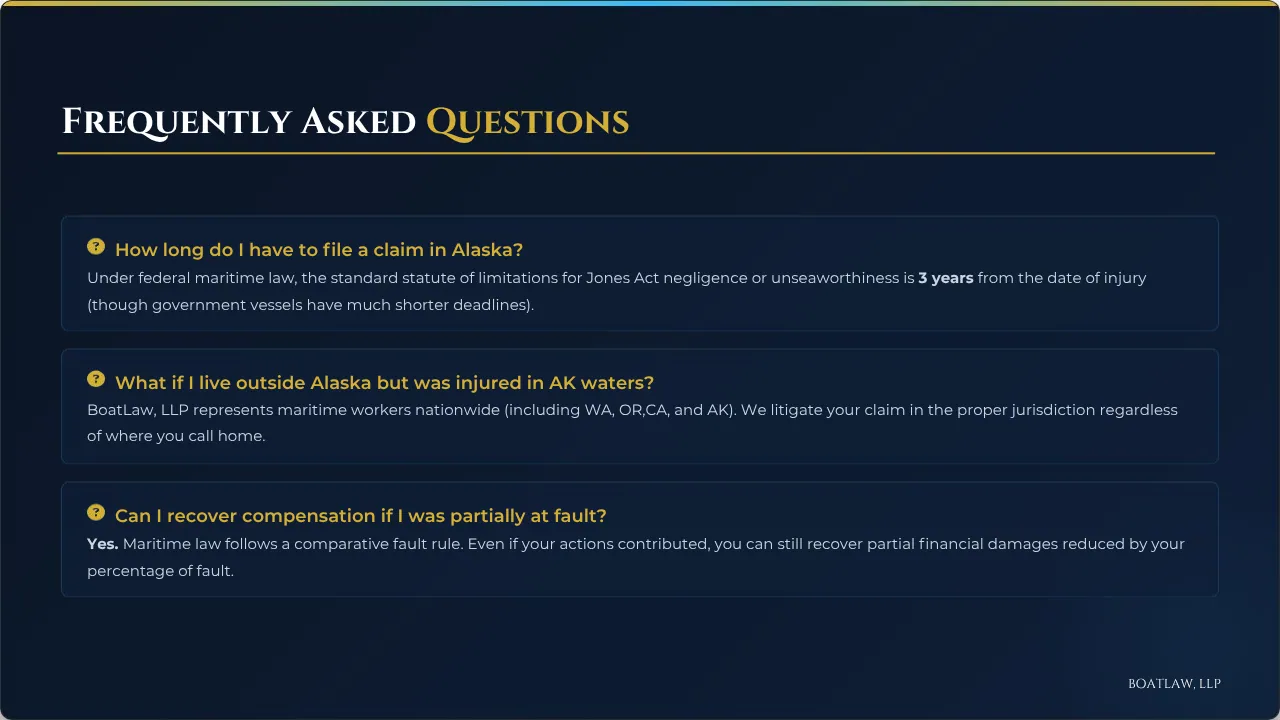
How long do I have to file a commercial fishing injury lawsuit in Alaska?
Under federal maritime law, the general statute of limitations for a Jones Act negligence or unseaworthiness claim is three years from the date of the injury. However, claims involving government-owned vessels or specific administrative requirements may have far shorter deadlines. Consulting a lawyer promptly is critical.
What if I live outside Alaska but was injured in Alaska waters?
Many commercial fishermen reside in Washington, Oregon, California, or other states while seasonably working in Alaska. BoatLaw, LLP represents maritime workers nationwide. We can handle your claim in the appropriate jurisdiction regardless of where you call home.
Can I recover damages if I was partially at fault for my injury?
Yes. Maritime claims utilize a comparative fault framework. Even if your actions contributed to the accident, you can still recover partial damages reduced by your percentage of fault. An employer’s failure to maintain a seaworthy vessel or enforce safety standards remains a primary factor in establishing legal liability.
Ready to evaluate your legal options after a commercial fishing injury in Alaska? Contact BoatLaw, LLP today to request a free consultation to discuss your case with a maritime attorney. If our attorneys determine that BoatLaw may be able to assist you, a member of our legal team will reach out shortly to schedule a free, no-obligation consultation with an experienced maritime attorney.
Legal Disclaimer
The information provided is for educational and informational purposes only. The information on this website is not intended as legal advice and should not be used as a substitute for consulting a licensed attorney. Legal outcomes and laws can vary by jurisdiction, and only a qualified lawyer can provide guidance tailored to your situation.

Nicholas J. Neidzwski is a trial attorney who handles maritime and personal injury litigation. Appearing for plaintiffs in state and federal courts throughout Washington, California, Oregon, Alaska, and other jurisdictions. Nick’s litigation experience includes the successful resolution of various Jones Act, general maritime, and product liability cases on behalf of many different individuals. Nick was named a Rising Star by Super Lawyers every year from 2016 through 2025, and was named a Super Lawyer in 2026. Learn more here.