

Understanding the statute of limitations for various maritime claims is essential for seamen, dockworkers, and offshore employees who experience injuries or losses at sea. Maritime statutes of limitations set legal deadlines for filing claims under laws like the Jones Act, the Defense Base Act (DBA), and the Longshore and Harbor Workers’ Compensation Act (LHWCA).
“A statute of limitations sets the maximum time after an event within which legal proceedings may be initiated.”
— Cornell Law School
Each type of maritime claim has its own specific time frame for filing a claim, so knowing the applicable maritime statute of limitations is crucial to protecting your right to compensation and ensuring your claim is filed on time.
What Are the Statute of Limitations for Maritime Laws?
A statute of limitations is the legal deadline for filing a claim after an injury or loss occurs. Once the deadline passes, your right to seek compensation may be permanently lost. In maritime law, this time limit ensures fairness by preventing claims from being filed after evidence or witness memories have faded.
If you were injured while working offshore or in a maritime-related job, it’s vital to understand which law applies to your case. For example, maritime statute of limitations periods differ under various federal acts and legal frameworks.
Jones Act Statute of Limitations
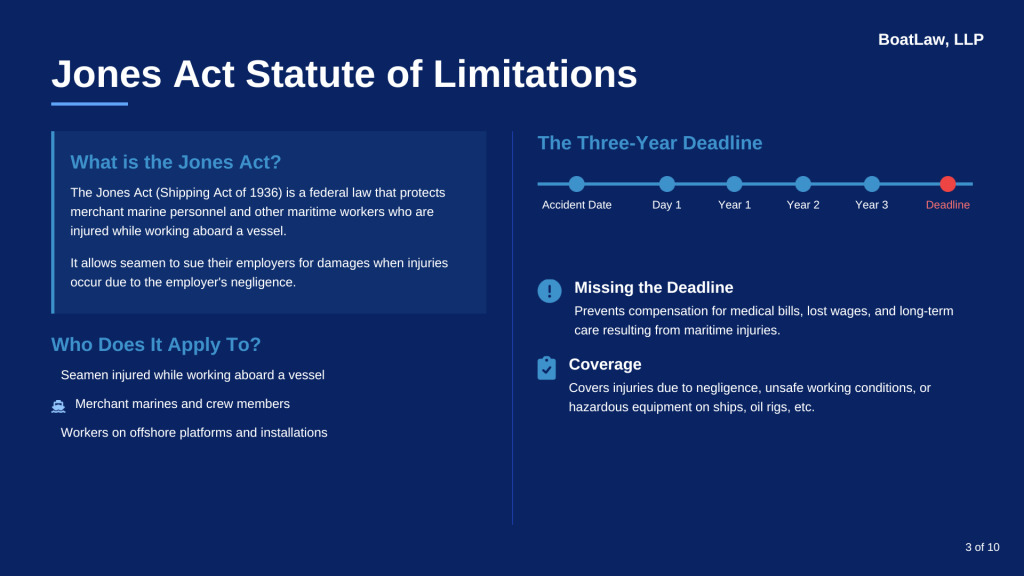
Under the Jones Act statute of limitations, seamen injured while working aboard a vessel have three years from the date of the accident to file a claim. This applies to injuries caused by negligence, unsafe working conditions, or hazardous equipment on ships, oil rigs, and other maritime workplaces. Understanding the Jones Act statute of limitations is crucial because missing this deadline can prevent injured workers from pursuing compensation for medical bills, lost wages, and long-term care resulting from their maritime injuries.
DBA Statute of Limitations
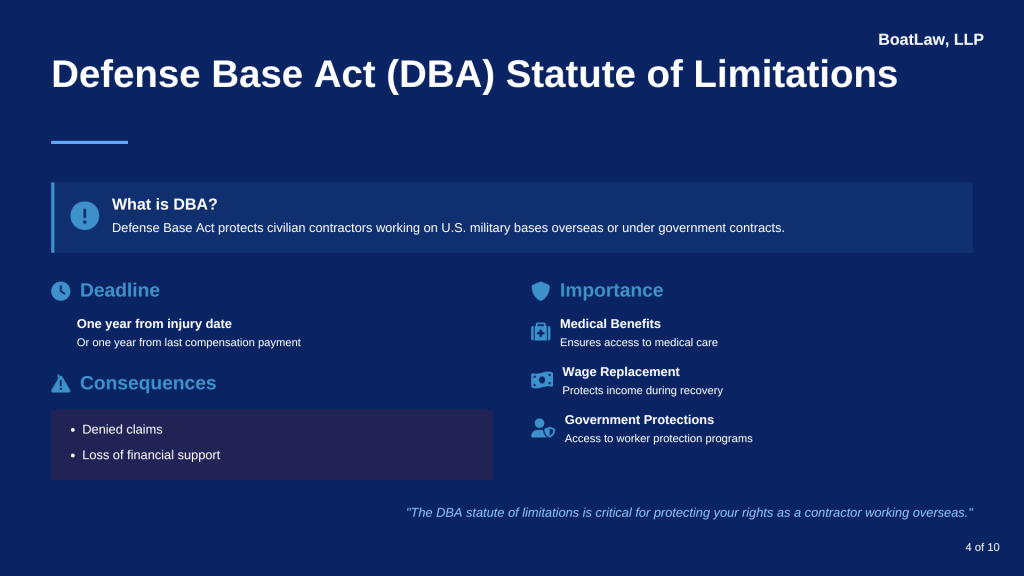
The DBA statute of limitations applies to civilian contractors working on U.S. military bases overseas or under government contracts. Claims must be filed within one year of the injury, or within one year of the last compensation payment received. Understanding the DBA statute of limitations is important because filing on time ensures eligibility for medical benefits, wage replacement, and other protections. Missing this deadline can result in denied claims, leaving injured workers without critical financial and medical support.
Longshore and Harbor Workers’ Compensation Act (LHWCA) Statute of Limitations
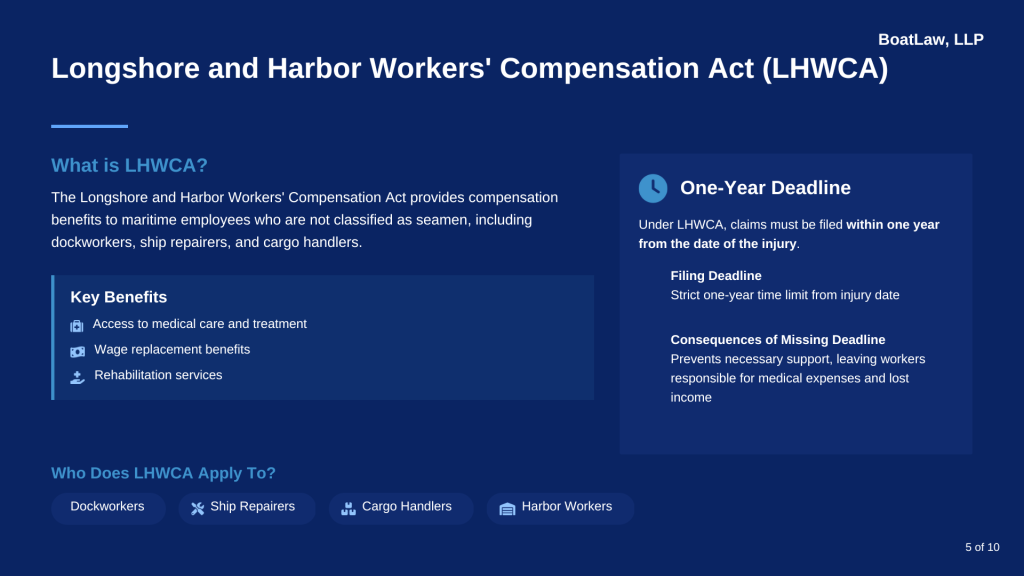
Under the Longshore and Harbor Workers’ claims statute of limitations, maritime employees who are not classified as seamen, such as dockworkers, ship repairers, or cargo handlers have one year from the date of the injury to file for compensation benefits.
Understanding the Longshore and Harbor Workers’ claims statute of limitations is crucial because timely filing ensures access to medical care, wage replacement, and other benefits. Missing this deadline can prevent injured workers from receiving necessary support, leaving them responsible for medical expenses and lost income.
Public Vessels Act and Suits in Admiralty Act Statute of Limitations
When a claim involves a U.S. government vessel or agency, different deadlines apply. The Public Vessels Act statute of limitations and the Suits in Admiralty Act both require claims to be filed within two years of the incident. Understanding the Public Vessels Act statute of limitations is essential to ensure that claims against government-operated vessels or agencies are submitted on time, protecting the claimant’s right to compensation for injuries, property damage, or other maritime losses.
Death on the High Seas Act (DOHSA) Statute of Limitations
For wrongful death cases occurring more than three nautical miles from U.S. shores, the Death on the High Seas Act statute of limitations provides a three-year period for family members to seek compensation. Understanding the Death on the High Seas Act statute of limitations is important to ensure that claims are filed on time, allowing families to pursue damages for loss of financial support, medical expenses, and funeral costs resulting from maritime accidents.
Maintenance and Cure Claims Statute of Limitations
Injured seamen may file for maintenance and cure, daily living and medical expenses, typically within the same three-year timeframe as the Jones Act. This period is known as the maintenance and cure claims statute of limitations. However, courts may allow exceptions depending on the circumstances of the case, making it important for seamen to act promptly to protect their right to compensation for medical care, living expenses, and other related benefits.
Why Acting Fast Matters in Maritime Injury Claims

Missing a filing deadline can bar your claim entirely. Even if you believe you have time, it’s best to start early, as collecting medical records, witness statements, and vessel logs takes time. A maritime lawyer can help determine which statute of limitations applies to your case and whether any tolling (extensions) may apply due to delayed discovery of the injury or other factors. Acting quickly ensures vital evidence is preserved, deadlines are met, and your rights under the maritime statute of limitations are fully protected through proper legal guidance and timely claim preparation.
Learn More About a Maritime Claim
If you suffer an injury while working offshore, BoatLaw, LLP stands ready to advocate for you. Our team ensures all maritime statute of limitations are met, carefully prepares your claim under the Jones Act, LHWCA, or other relevant maritime laws, and guides you every step of the way. Trust us to protect your rights and pursue the full compensation you are entitled to.
Legal Disclaimer
The information provided is for educational and informational purposes only. The information on this website is not intended as legal advice and should not be used as a substitute for consulting a licensed attorney. Legal outcomes and laws can vary by jurisdiction, and only a qualified lawyer can provide guidance tailored to your situation.

Nicholas J. Neidzwski is a trial attorney who handles maritime and personal injury litigation. Appearing for plaintiffs in state and federal courts throughout Washington, California, Oregon, Alaska, and other jurisdictions. Nick’s litigation experience includes the successful resolution of various Jones Act, general maritime, and product liability cases on behalf of many different individuals. Nick was named a Rising Star annually by Super Lawyers from 2016 through 2025, and was named a Super Lawyer in 2026. Learn more here.