


Every year, thousands of passengers board whale watching tours in the San Juan Islands, dinner cruises on Puget Sound, or fishing charters out of coastal ports like Bellingham, Seattle, Portland, Los Angeles, and San Francisco, expecting nothing more than a memorable day on the water. But accidents happen. When they do, corporate vessel operators count on your confusion to protect their bottom line.
If you or a loved one was injured on a tour boat or charter vessel, your case is not governed by ordinary state personal injury law. It falls under general maritime law, which is a specialized area of federal law with its own rules, standards, and, critically, its own unforgiving deadlines.
What Law Governs Tour Boat and Charter Passenger Injuries?
When a passenger is injured aboard a commercial vessel on navigable waters, including whale watching excursions, sightseeing cruises, and chartered fishing trips, general maritime law controls the claim. This body of federal law dictates passenger rights and vessel operator liabilities, overriding standard state land-based laws and heavily relying on maritime case precedents and the terms of your ticket.
The Kermarec Standard: What Duty of Care Does a Tour Boat Owe You?
Under general maritime law, vessel owners and tour boat operators are held to the Kermarec standard, which requires them to exercise reasonable care under the circumstances. This is not an automatic guarantee of passenger safety in all conditions, but it does impose a powerful legal obligation on operators to take prudent precautions to protect everyone on board.
In practical terms, a maritime operator must:
- Monitor weather conditions and refrain from sailing into dangerous seas.
- Heed professional weather warnings and maritime advisories before and during a trip.
- Maintain a completely seaworthy vessel equipped with functional safety equipment.
- Respond appropriately and provide immediate aid when a passenger is injured.
When an operator falls short of this standard, they can and should be held liable for any resulting injuries.
How to Prove a Negligence Claim After a Tour Boat Injury
A passenger injured on a tour boat or charter vessel has a negligence cause of action under maritime law. To succeed, you must establish three critical elements:
- Duty: The tour boat or charter operator owed you a duty of reasonable care under the circumstances (the Kermarec standard).
- Breach: That duty was breached by an act of negligence, such as proceeding into dangerous weather or failing to act on hazard warnings.
- Causation: The operator’s negligence directly caused your injury.
A common example of maritime negligence involves operators who push ahead into rough seas or inclement weather despite clear warning signs, resulting in violent vessel motions that throw passengers from chairs or cause severe slip-and-falls.
What to Do Immediately After a Tour Boat Injury
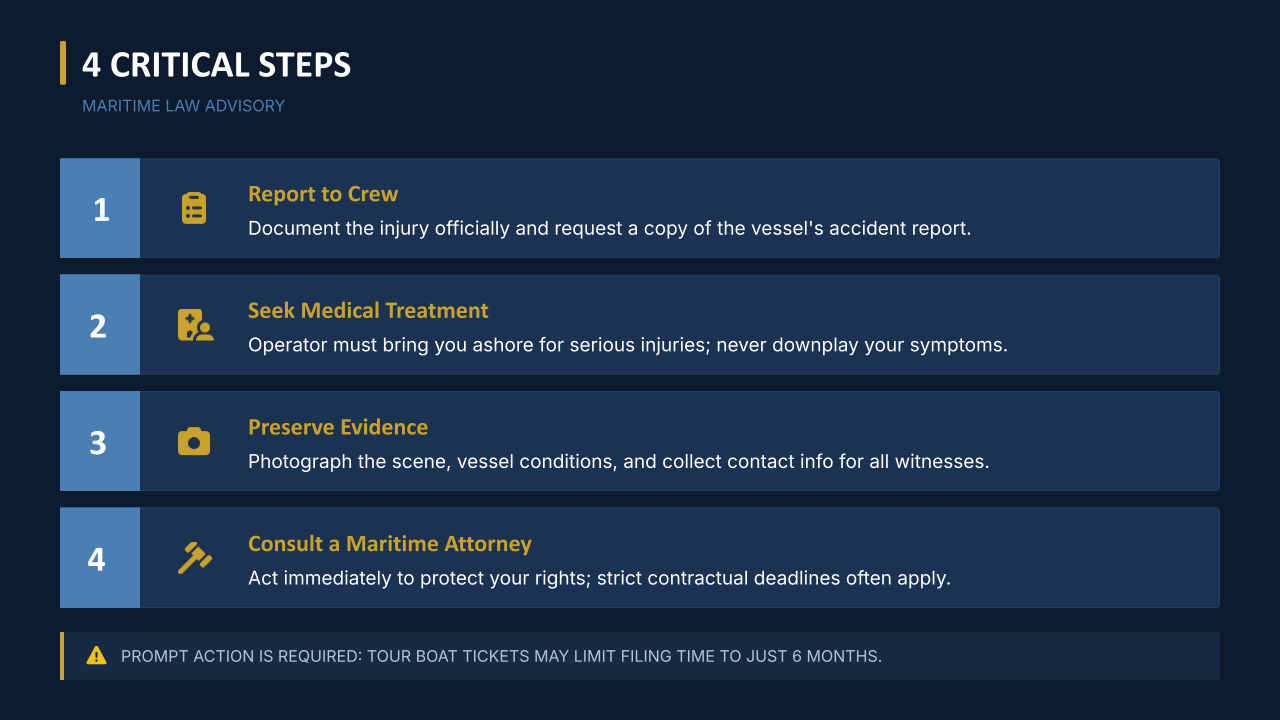
How you respond in the hours following an injury can make or break your legal claim. Corporate insurance adjusters will look for any reason to deny your account. Protect yourself with these steps:
- 1. Report the Injury to the Crew: As soon as safely possible, notify the vessel’s crew. This creates an official record of the incident and triggers the operator’s obligation to complete a formal maritime accident report.
- 2. Seek Immediate Medical Treatment: If your injury is serious, the operator has a legal obligation to bring you ashore for medical treatment. Do not downplay your pain. Prompt medical care protects your health and legally documents the severity of the trauma.
- 3. Preserve the Evidence: If you can do so safely, take photographs of the scene, the vessel’s condition, and any hazards that contributed to your injury. Collect names and contact info from fellow passengers and witnesses.
- 4. Consult a Dedicated Maritime Attorney Immediately: Because of the hidden traps discussed below, reaching out to an experienced admiralty lawyer as soon as possible is the single most important step you can take.
The Hidden Pitfalls in Your Ticket: Understanding the Contract of Passage
Here is something most passengers never realize until it is too late: your ticket is a binding legal contract. Under maritime law, it is known as a contract of passage, and the fine print buried in it can dramatically strip away your rights if you miss the traps.
Common restrictions found in contracts of passage include:
- Venue Requirements: Your ticket may stipulate that any lawsuit must be filed in a specific court or geographic location. For example, a ticket for a Puget Sound cruise might force you to litigate exclusively in federal court in Seattle, even if you live out of state.
- Shortened Filing Deadlines: While federal law generally allows three years to file claims against common carriers, a contract of passage can legally shorten this window to just six months to file a written notice of claim and one year to bring a lawsuit. Missing either window permanently bars you from recovery.
- Federal Court Requirements: Many contracts of passage require claims to be filed exclusively in federal court, circumventing maritime law’s traditional “savings to suitors” clause which normally allows passengers to file in state courts. Overlooking this jurisdictional rule can result in your case being permanently dismissed.
Why You Need an Experienced Maritime Lawyer — And Why Timing Matters
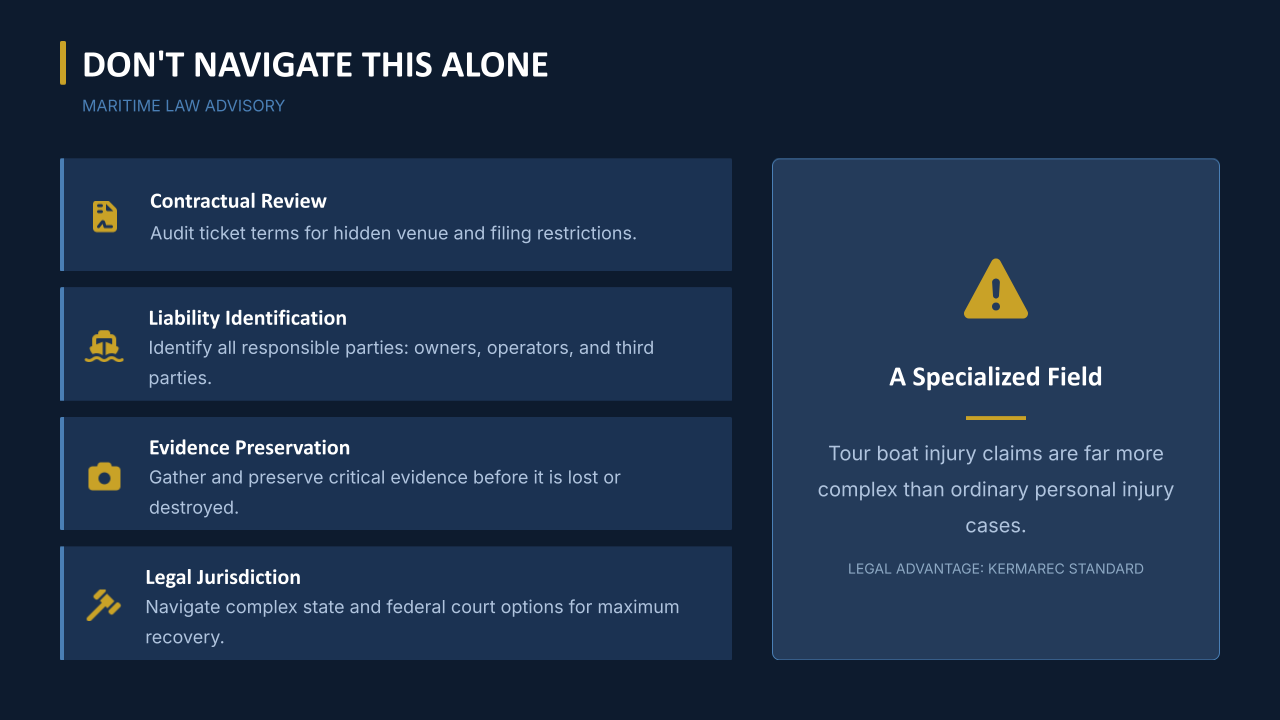
The combination of specialized legal standards, shortened deadlines, and venue traps makes tour boat injury claims exponentially more complex than ordinary land-based personal injury cases.
At BoatLaw, LLP, our legal team shares a lifelong love of the sea and brings over 45 years of hard-fought success fighting shipping corporations and vessel owners across Washington, Oregon, Alaska, and California. Under the leadership of veteran maritime attorneys Doug Williams and Nick Neidzwski, we know exactly how to pull apart a contract of passage, preserve evidence before corporate defense teams bury it, and build a winning negligence case under federal admiralty law.
Speak With a Maritime Injury Attorney Today
If you were injured on a whale watching tour, dinner cruise, fishing charter, or any other commercial vessel, you deserve answers from an advocate who knows your way of life and understands the law.
We operate strictly on a contingency fee basis, meaning there are absolutely no upfront costs and you pay nothing unless we win your case. The clock starts ticking the exact moment you are injured, and you may have as little as six months to protect your rights.
📞 Call BoatLaw, LLP today at 1-800-BOATLAW or fill out our online contact form for a completely free, confidential consultation. Let us take the wheel while you focus on recovery.
Legal Disclaimer
The information provided is for educational and informational purposes only. The information on this website is not intended as legal advice and should not be used as a substitute for consulting a licensed attorney. Legal outcomes and laws can vary by jurisdiction, and only a qualified lawyer can provide guidance tailored to your situation.

Douglas R. Williams was raised in a military family. After retiring from the armed forces, his father sailed as the chief medical officer with many of the most popular cruise lines, including Holland America Line, Carnival Cruise Line, Disney Cruise Line, and Norwegian Cruise Line. When not in school, Doug spent a good part of his youth in the crew quarters sailing with his father on cruise ships. He developed a practical knowledge of the maritime industry from a young age. Learn More here.